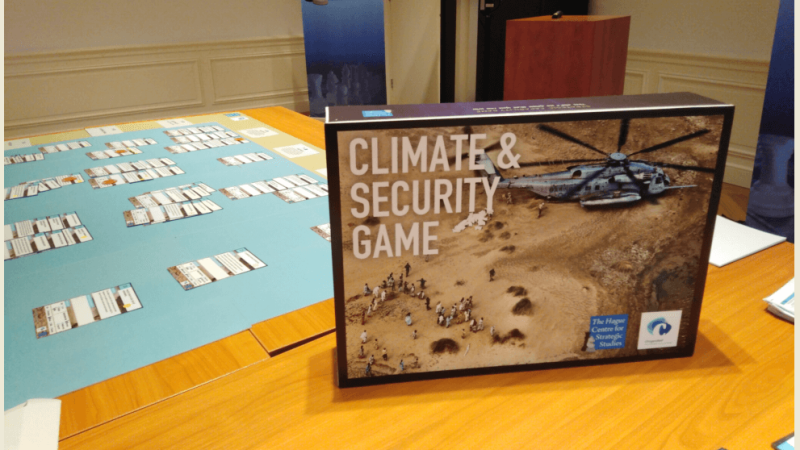
This year, participants of the Planetary Security Conference will have a unique opportunity to play the Climate & Security Strategic Capability Game, a serious board game developed jointly by The Hague Centre for Strategic Studies (HCSS) and the Clingendael Institute.
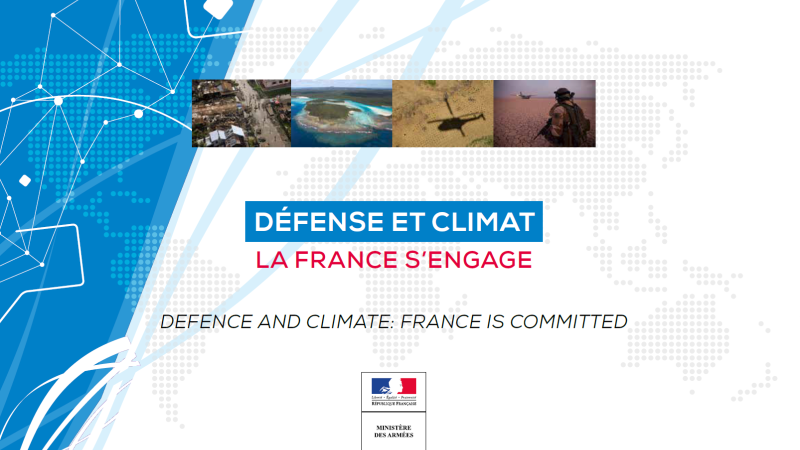
According to the French Ministry of Defence, climate change, combined with other political, economic, demographic and social factors, is degrading human security and global stability. It undermines the resilience of the most fragile states, whose populations are the first victims and are thus likely to favour the emergence of conflicts or crises.
On 13 December, a regional consultation meeting is taking place in Aruba. The Conference Climate and Security in the Caribbean Region: A Roadmap to Resilience will bring together technical experts, practitioners and policymakers in the fields of climate change, disaster risk management and regional security.
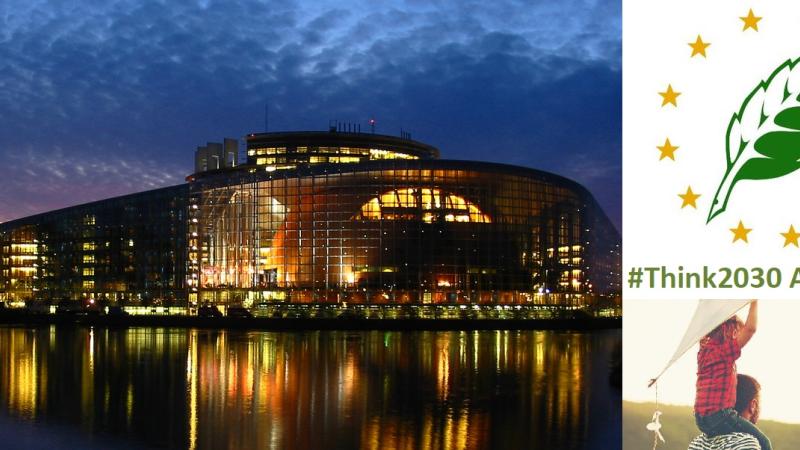
The #Think2030 report is based on a series of papers set in motion by a platform of 100 policy experts from European think tanks, civil society, the private sector and local authorities. It cover all major environmental challenges and maps out what changes in European policies could help European citizens to live prosperous, peaceful and healthy lives by 2050.
On 13 December, the European External Action Service, in partnership with The Center for Climate and Security and World Resources Institute (WRI), will hold a side event outlining new tools for anticipating climate security crises and practical institutional frameworks for using foresight to manage climate security risks.
On 13 December, the European External Action Service, in partnership with adelphi and the Planetary Security Initiative, will host a side-event at COP24 aimed at tracking international progress in addressing climate-related security risks, as well as raising awareness on climate security among the COP community.