Research paper published by Chatham House, September 21, 2026.
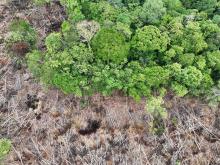
A new report by Chatham House examines the risks of using biofuels as a major response to a potential Gulf energy supply shock. The authors argue that while biofuels may appear to offer a rapid substitute for oil imports, large-scale expansion of crop-based biofuel production could undermine food security, accelerate land-use change and increase pressure on forests and biodiversity.
The “Central Asia Young Water Diplomats programme” implemented by the Clingendael Institute and IHE Delft, 2024-2026, brought together young water diplomats from Central Asia.
Commentary published by Carnegie Endowment for International Peace, September 17, 2026.
First Glance commentary published by Bruegel on September 8, 2026.
Commentary published by Carnegie Endowment for International Peace, August 27, 2026.
How do climate change, cartels, and government responses intersect in Central and Latin America?
Report published by the Norwegian Institute of International Affairs (NUPI) and the Stockholm International Peace Research Institute (SIPRI), August 2026
Critical Questions Interview by the Center for Strategic Studies and International Studies, August 5, 2026
In a recent CSIS Critical Questions Interview, Franck Gbaguidi and Caitlin Welsh provide a rounded overview of the connection between water and security. During the interview multiple elements that are turning access to water into a security issue were highlighted.
Policy Brief published by the United Nations Convention to Combat Desertification (UNCCD), 19 August, 2026.
Droughts are becoming harder to manage as a standalone environmental hazard. However, their impacts can move through land and water systems into food production, energy, transport, livelihoods, migration and, in already fragile contexts, political instability and conflict.