
Excerpt from the panel discussion at ‘Oesterreichische Nationalbank’ (OeNB), January 2026.
With the ongoing crisis in Ukraine and a changing geopolitical landscape, defence investment is surging. In the discussion panel, Dr Florian Krampe explains why it is essential to invest in both defence and climate change mitigation simultaneously. Currently, we treat defence and climate change as separate priorities, competing for investment. We assume that the conflict in Ukraine is so large that we can ignore climate mitigation strategies. However, Dr Krampe argues that we don’t have this luxury:
“If we ignore climate change, which is creating stranded assets, we are building a fortress on quicksand”
European security is shaped by the environmental context, which is challenged by climate change. For example:
- Arctic permafrost melt is destabilising critical infrastructure. This infrastructure not only supports our radar systems but also our nuclear deterrent.
- Melting glaciers change the salinity of seawater, interfering with sonar capabilities for detecting submarines.
- Extreme heat creates difficulty for aircraft to take off, limits ships' ability to cool their nuclear reactors, and limits soldiers' training schedules.
While also diverting military resources. In 2024, all 10,000 military personnel were reassigned from defence readiness to disaster relief efforts.
Key recommendations
Dr Krampe argues that climate policy is peace policy, but this holds only if climate resilience is treated as a prerequisite for defence capabilities and effectiveness. To achieve this, investments should be based on dual-use capabilities that serve both climate security and defence. Recommendations include:
- Invest in recentralised energygrids, to increase autonomy. Spain is already leading in this area, having established microgrids and batteries.
- Improve political harmonisation, to align climate mitigation and defence priorities. In Sweden, for example, a wind farm was rejected as it interfered with military radar.
- Acknowledging geopolitical reality: third countries are trying to actively hold back the European green transition to keep countries dependent on foreign (fossil) fuel.
To conclude, he states that if we first “secure our defence capabilities, then save the planet; we will fail with both”, as climate change is already eroding defence capabilities today.
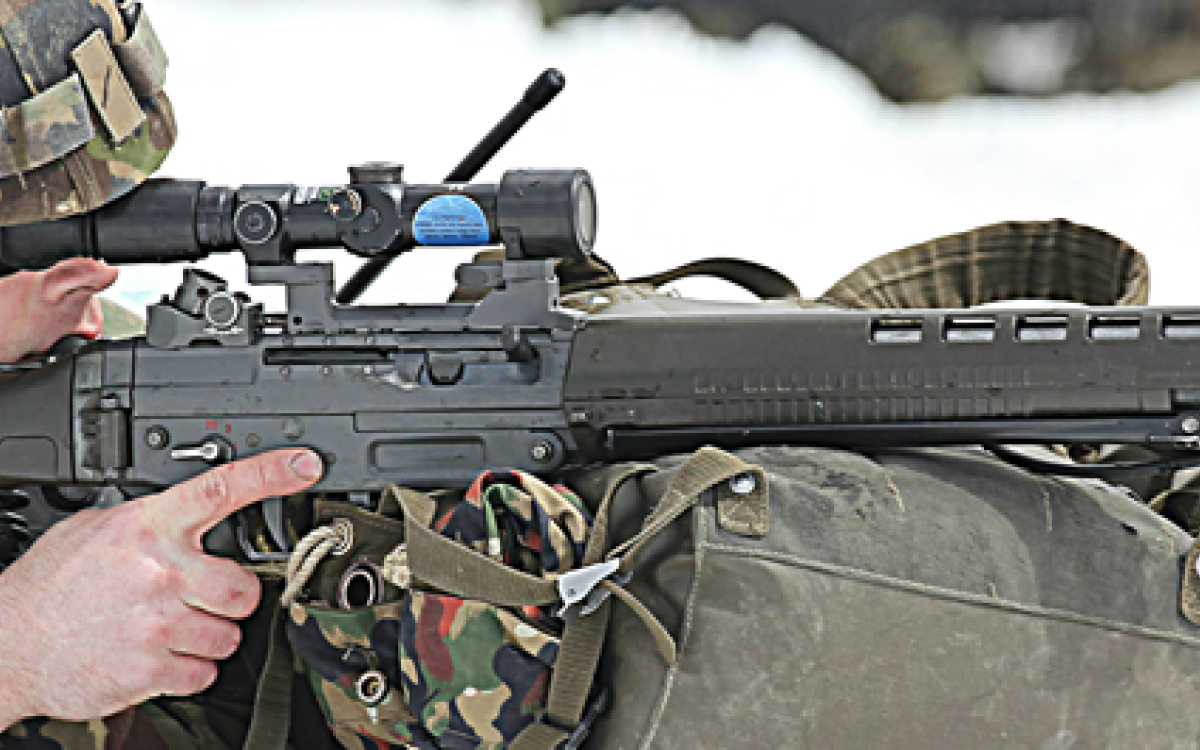
Photo by Simon Infanger on Unsplash
This text is based on extracts from a panel discussion by the Österreichische Nationalbank. The contributions to the panel discussion are published by Dr Florian Krampe. To watch the full contribution, follow this link.