
This report was published by the Global Challenges Foundation, December 2025.
This report posits that humanity is navigating a critical juncture defined by accelerating, interconnected risks that threaten the stability of the Earth system. The authors argue that the current global governance architecture is increasingly inadequate to manage modern existential threats that transcend borders. At the same time, recent developments show that the strategic security environment is showing signs of strain in certain domains.
The report analyses five specific risk areas: Earth system stability and climate change, ecological collapse, weapons of mass destruction (WMD), AI in the military domain, and near-Earth asteroids. Ultimately, the publication serves as a call for a paradigm shift in multilateral cooperation, advocating for governance systems that are anticipatory, inclusive, and grounded in the scientific and physical realities of the Anthropocene.
Environmental and Security Crises
The report identifies a convergence of environmental and security crises, where human activities have pushed planetary systems beyond safe limits while simultaneously destabilizing the geopolitical order meant to manage such threats:
Earth system tipping points demand new governance approaches: Traditional climate governance, designed for gradual and predictable change, is no longer adequate in a world approaching irreversible thresholds; instead, it must become anticipatory, adaptive, and cross-domain to address emerging systemic disruptions.
Tipping points fundamentally change how the Earth system behaves, meaning governance must shift from managing gradual change to anticipating irreversible transformations that unfold across decades and cascade through climate, ecosystems and societies.
Ecological systems are approaching collapse with cascading risks: The destabilisation of key ecosystems may trigger cascading societal, climatic, and economic impacts, amplifying systemic risk and challenging current political and institutional capacities.
As ecosystems are pushed beyond safe boundaries by climate change, land‑use pressures and resource extraction, their collapse can trigger far‑reaching societal disruptions, undermining food, water, health and political stability in a rapidly interconnected world.
Key recommendations
The authors advocate for a fundamental transformation of global governance that moves from reactive crisis management to anticipatory, systems-based stewardship. The following recommendations outline pathways for strengthening multilateral institutions and legal frameworks:
- Govern the planetary commons: Policy-makers must expand the definition of global commons beyond areas like the high seas to include critical biophysical systems, such as the cryosphere and biosphere, regulating them through fair access and science-based Earth system boundaries.
- Strengthen anticipatory and adaptive governance: Build institutions capable of acting before certainty, incorporating early‑warning systems, intergenerational representation, and deliberative mechanisms (e.g., citizens’ assemblies) to navigate nonlinear tipping‑point risks and govern for long‑term planetary stability.
- Integrate ecological governance across scales and sectors: Replace fragmented, siloed environmental policymaking with adaptive, inclusive models that link local nature‑based solutions to global frameworks, address underlying inequalities, and align biodiversity, climate and resource governance into coherent, mutually reinforcing action.
Conclusion
The report concludes that the current system of global governance is under immense stress, characterized by fragmentation, eroding legitimacy, and historical exclusion. However, the authors argue against retreating into isolationism.
This shows that the interconnected nature of modern risks offers an opportunity to reimagine cooperation. The governance architecture must transition from imbalance to inclusion, ensuring that the Global South and civil society have equitable representation in shaping the rules that manage shared planetary risks.
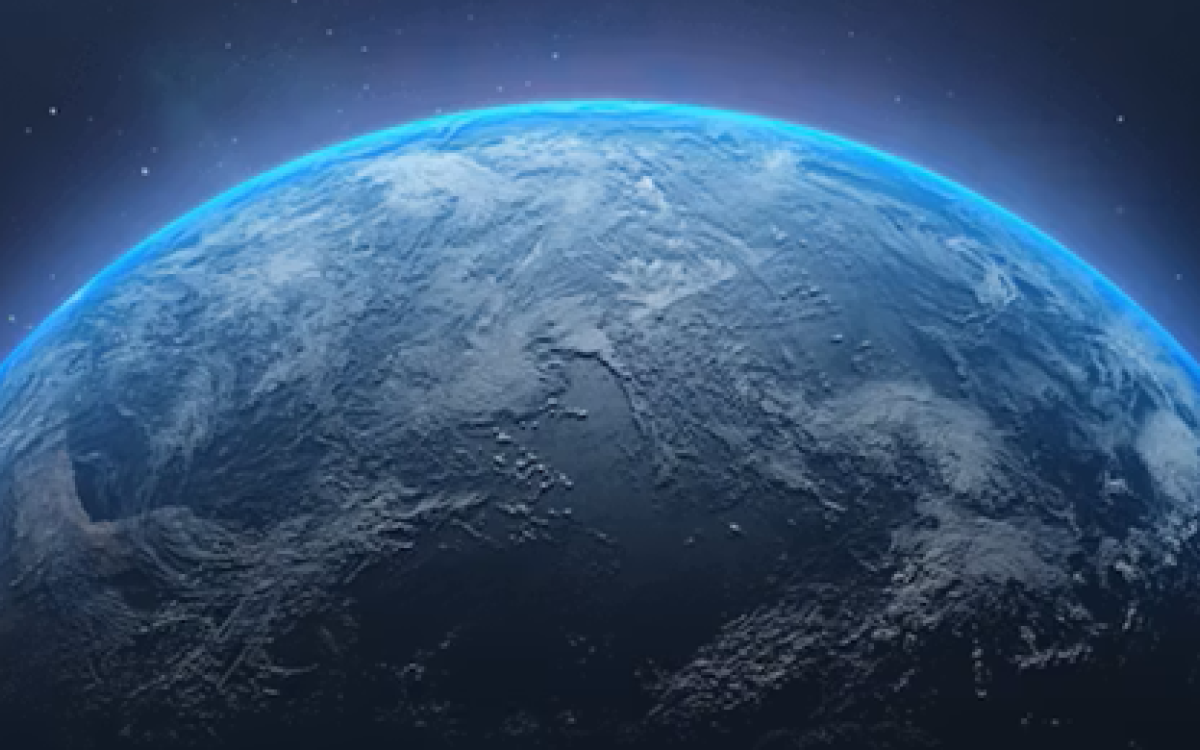
Photo Credit from Javier Miranda on Unsplash.
This text is based on extracts from a report written by Fatima Denton, Johan Rockström, Manjana Milkoreit, David Obura, Wilfred Wan, Denise Garcia, Romana Kofler, Eva Mineur, Anna Möller-Loswick, and Anja Olin-Pape from the Global Challenges Foundation. To read the complete piece, follow the link here.
See below for our coverage on similar topics: