
Earlier this month, a new website was launched by the Cascade institute, a Canadian research centre focused on emerging global crises. Polycrisis.org aims to serve as an information hub and resource library for the field of polycrises.

Earlier this month, a new website was launched by the Cascade institute, a Canadian research centre focused on emerging global crises. Polycrisis.org aims to serve as an information hub and resource library for the field of polycrises.

In a new report for The Clingendael Institute and The Planetary Security Initiative, Tobias von Lossow and Annabelle Houdret offer five action areas for thinking beyond traditional approaches and promoting opportunities for water cooperation in the Middle East. The text below is the executive summary of the report. Read the full report here.
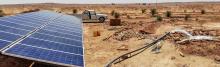
In the Middle-East and North-African region (MENA), the multidimensional profile of prevalent crises requires a way of thinking about development that goes beyond the conventional approach. In an article for UNDP, Kishan Khoday explains how a climate security perspective makes the shift to new pathways and aims for a systemic impact. We should move from extractive oriented development to risk-informed solutions which acknowledge the key roles of the socio-ecological context.
The following text is a summary of a report commissioned by the Nordic Working Group for Environment and Economy (NME) and the Nordic Working Group for Climate and Air (NKL) under the Nordic Council of Ministers. This council is the official body for intergovernmental cooperation in the Nordic Region. Find the full report here.
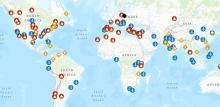
The Center for Climate and Security (CCS) has recently begun a project in tracking Military Responses to Climate Hazards (MiRCH). It seeks to catalogue and map out military deployments by tracking their date, location, the actors involved, and circumstance of their deployment. The map currently displays deployments from June 2022 to the 1st of August 2023
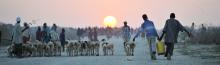
In Somalia, climate-induced shocks have affected an estimated 8.2 million people (or over 50% of population), including 6.6 million with critical food insecurity conditions. Due to a lack of formal instruments and limited coordination capacities, government adaptation plans haven’t been implemented successfully. According to Mohamed Mire, a research consultant at the Juba Institute for Climate Adaptation, Somalia urgently needs to strengthen its planning and coordination capacities.
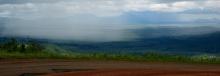
The objective of this article is to analyze the influence of climate change on the occurrence of conflicts in the crisis regions of Cameroon. To achieve this, we use the two-way fixed effects method on data ranging from 2000 to 2021. The main results show that climate change directly increases conflicts during relatively warm periods and/or with less precipitation. Moreover, through the channel of the marginal effects of food price volatility and deforestation, we show that climate change indirectly influences conflicts.
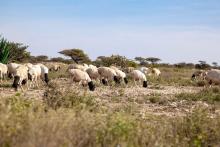
Somalia has in recent years been ravaged by the effects of a multi-year drought driving food insecurity and conflict across the Horn of Africa and pushing millions to migrate to urban settings in search of food and safety. PSI recently sat down with the Climate and Environment Advisor for the UN in Somalia, Christophe Hodder. We asked him about his work and the environmental challenges that Somalia will face in the coming years.
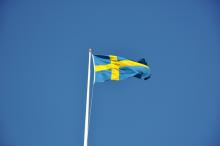
Since 2010, there has been a shift in the Swedish armed forces' (SAF) perception on Climate change. A recent study, based on a qualitative analysis of official documents, publications, and public statements, suggests that climate change is becoming institutionalized in the SAF. According to the researcher, Rickard Söder, climate change has not been a dominant issue for the SAF before. However, it has been conceptualized differently in recent years, and mentioned increasingly in strategic documents and statements by senior officials.