
Commentary published by the International Energy Agency, September 30, 2026.
In a recent commentary, the authors examine the growing economic and geopolitical risks associated with concentrated critical mineral supply chains. They argue that a "mineral security premium" could help support supply diversification by treating higher costs as a form of insurance against supply disruptions and broader economic vulnerabilities.
A proliferation of export controls and its growing economic risks
A recent proliferation of export controls underscores the growing economic risks posed by concentrated mineral supply chains. In 2025, Chinese restrictions on rare earths demonstrated how disruptions in relatively small mineral markets can have far-reaching consequences: the authors estimate that full implementation of these controls could place up to USD 6.5 trillion in annual sales outside China at risk across a range of sectors, including automotive (USD 3.3 trillion), aviation, trucks and trains (USD 1.1 trillion), electronics (USD 1.0 trillion), defence (USD 0.6 trillion) and data-centre servers (USD 0.4 trillion).
The trend extends beyond China: the number of mineral tariff codes subject to export controls has tripled since 2023, with the Democratic Republic of the Congo's cobalt export quota, Zimbabwe's lithium trade restrictions and export measures affecting graphite providing further examples. These developments demonstrate how critical mineral dependencies are increasingly becoming an immediate economic security challenge.
Diversifying supply chains: a solution constrained by cost competitiveness
While supply diversification is key to these structural risks, higher production costs hinder the development of alternative sources. The authors note that:
In many cases, operating costs can be around 50% higher than in established supply bases, materially affecting investment decisions.
Consequently, policymakers face the challenge of determining who should bear the associated costs and how these can be effectively addressed.
The authors argue that a “mineral security premium” can help unlock support for supply diversification by treating higher costs as a form of insurance against geopolitical disruptions and supply-chain vulnerabilities. Reducing these vulnerabilities may require only modest investment: meeting projected 2035 demand for magnet rare earths outside China would require around USD 60 billion over the next decade, a small sum relative to the trillions of dollars of downstream economic activity exposed to supply disruptions.
Who bears the mineral security premium?
The economic case for diversification depends not only on the cost of securing supply, but also on how those costs are transmitted through value chains and reflected in the prices of downstream products. Understanding these effects remains a critical policy challenge.
The investment needed to diversify strategic mineral supplies remains modest compared with major disruption risks
The authors argue that, because critical minerals typically account for only a small share of final product costs, higher prices resulting from supply diversification can often be absorbed with limited effects on consumers. While some sectors, such as battery and motor manufacturing, may face greater cost pressures, the costs of a mineral security premium can be shared across governments, industry and consumers.
Policy considerations
How the costs of diversification are distributed across governments, industry and consumers will depend on the policy tools and burden-sharing mechanisms adopted. A mineral security premium provides one framework for addressing strategic supply risks, but its implementation requires careful design. Both the level and form of intervention should be tailored to the characteristics of individual minerals and markets: support levels may reflect supply risk and economic importance, while the choice between supply- and demand-side measures will depend on market and value chain conditions.
This summary is based on extracts from a commentary published by International Energy Agency and written by Shobhan Dhir (Critical Minerals Analyst), Tae-Yoon Kim (Head of Critical Minerals Division). To read the full article, follow this link.
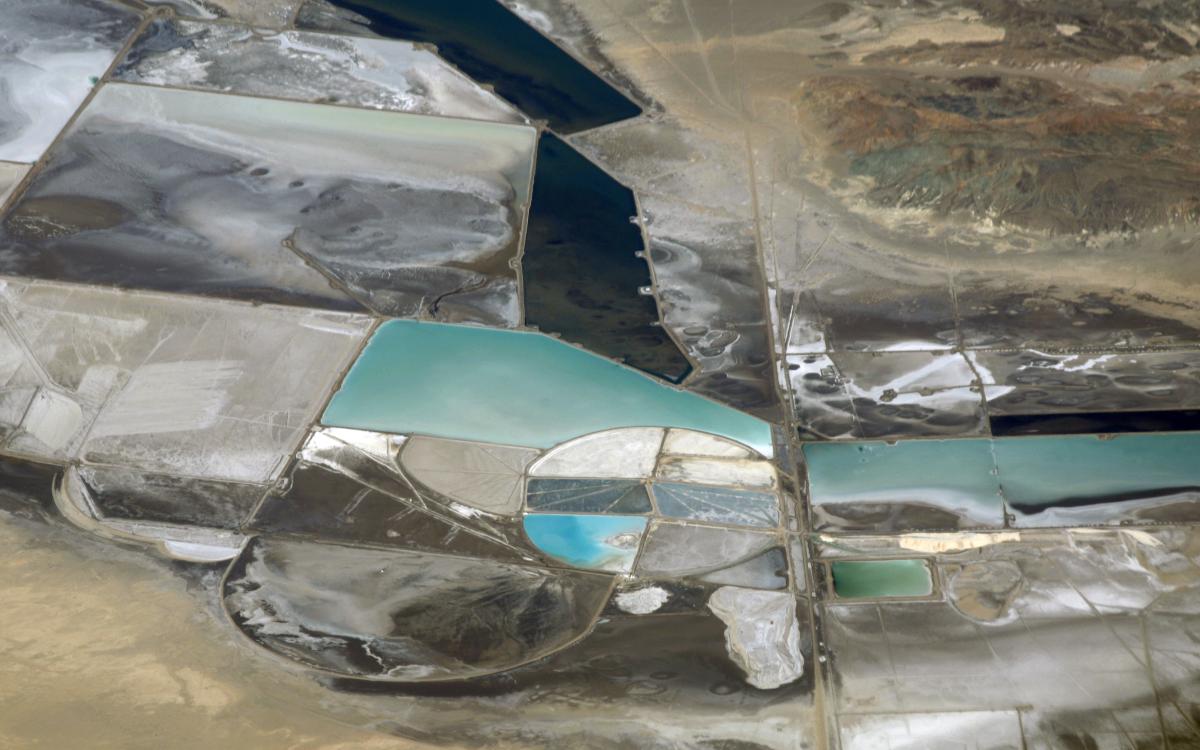
Photo credit: Doc Searls, “Chemetall Foote Lithium Operation, Clayton Valley, Nevada”, taken on August 6, 2010, via Flickr, licensed under CC BY 2.0