
This report by Tom Ellison, Noah Fritzhand, Dr Alexandra Naegele, and Monica Caparas from the Council on Strategic Risks and the Woodwell Climate Research Center addresses the need to understand the risks of climate-induced crop failures. It explores how these risks threaten food security in Europe and globally, and recommends actions to strengthen global food security. The report was published in June 2026.
The report examines how climate change is increasing the risk of simultaneous crop failures across major global breadbaskets and asks what this could mean for European security, NATO resilience, and global stability. In the report, a country’s or a region’s breadbasket is defined as an area that provides large quantities of food. Drawing on crop models and scenario-based analysis, it shows how disruptions to wheat, maize, and rice production can cascade into price shocks, geopolitical competition, instability in vulnerable regions, and pressure on Europe’s political cohesion and external partnerships. In that sense, the report answers a broader strategic question: why food-system resilience should be treated not only as an agricultural or humanitarian issue but also as a core security imperative.
Findings
Geopolitical fragmentation, conflict, extreme weather, and global aid cuts already strain food security. Meanwhile, climate change is increasing the likelihood of crop failures in the American, European, and Asian breadbaskets, which produce most of the staple crops underpinning global food security. The report finds that European governments, the European Union, and NATO would face multifaceted security challenges amid multiple breadbasket failures, whether in Europe, India, the Americas, Russia, or Asia. In combination with the deteriorating security context, such food shocks could undermine unity and resilience in the face of Russian hybrid threats, worsen humanitarian conditions and stability in key European partners, or shift Europe’s global relationships.
The report states that for Europe, global breadbasket failures could open rifts for Russian meddling, fuel instability in key partners, and elevate food production as a geopolitical lever. Breadbasket failures in the Global North would likely spike food prices to levels rivalling those of the 2022-2023 food crisis, stoking public dissatisfaction and offering Russia opportunities to exploit divisions within and between European countries. Partners dependent on imported cereals would face food shocks and potential unrest, echoing the Arab Spring. Food exporters like Russia or the US could gain leverage as importers in Europe, Africa, China, and the Middle East compete.
Regional food security impacts could spill over into neighbouring regions and the wider world. As seen in the Sahel, worsening food insecurity enables extremist gains, contributes to cross-Mediterranean migration, or creates openings for geopolitical exploitation. While during conflicts, warring parties are likely to increasingly weaponise food shortages and access, a growing phenomenon seen from Syria to Ukraine and in Gaza in recent years.
It further highlights that multiple breadbasket failures would place affordable food at the centre of geopolitical manoeuvring, shaping Europe’s global economic cooperation and competition. Exporters such as Argentina, Brazil, India, Russia, and the United States would gain leverage from any remaining export capacity, while importers, including China, Africa, the Middle East, and much of Europe and Latin America, would have to compete for scarce supplies.
Therefore, the report concludes that as Europe strives for self-sufficiency and competitiveness, investing in a resilient global food system would be a strategic imperative.
The report recommends:
- Strengthen Cooperative Resilience Initiatives: NATO and the EU ought to prioritise strengthening food security through existing and planned resilience frameworks.
- Anticipate Instability and Hybrid Warfare: For NATO, the EU, and member state governments, this would mean deepening and regularising assessments of crop failure risk and security implications, including for disinformation and hybrid warfare.
- Support Strategic and Vulnerable Partners: Supporting food-vulnerable partners through investment in resilient crops, early warning systems, trade diversification, and food infrastructure, would buffer shocks and extend European soft power.
- Coordinate Trade Responses: For Europe to make mutual commitments with key trade partners would avoid export bans during food shocks. Within Europe, states would pre-coordinate responses to maintain EU unity, while producers could support transparent information sharing to prevent uncertainty or misinformation during crises.
- Invest in Agricultural R&D: EU and NATO nations ought to boost investment in climate-smart agricultural R&D to develop innovations relevant to defense, which could also benefit the civilian sector.
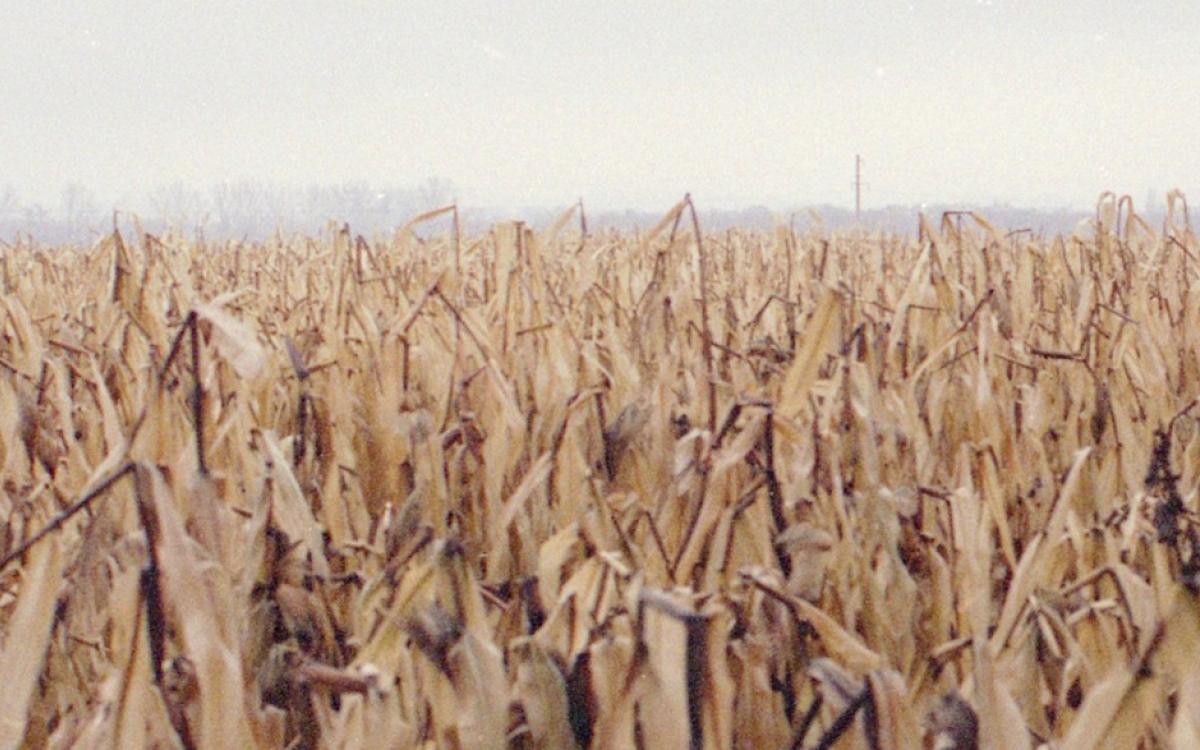
Photo by Alexey Demidov on Unsplash
This text is based on extracts from the report published by the Council on Strategic Risks and the Woodwell Climate Research Center. To read the full contribution, follow this link.