
Planetary Security Initiative Report, April 2026
Indian National Security scholars and practitioners have increasingly acknowledged climate change as a strategic issue. South Asia is a highly vulnerable region that is warming faster than the global average and experiencing record-breaking natural disasters. However, the Indian strategic discourse and matrix remain primarily focused on civilian-centric impacts. Consequently, India’s national security strategy presents a critical gap, particularly regarding how climate change directly affects (and in certain cases, impairs) military readiness – not only by altering physical landscapes, intensifying conflicts, and straining resources, but also by impacting four key pillars: personnel, infrastructure, platforms, and equipment. In addition to this paucity of climate security thinking, there is an absence of a coherent articulation of what ‘readiness’ means for the Indian military.
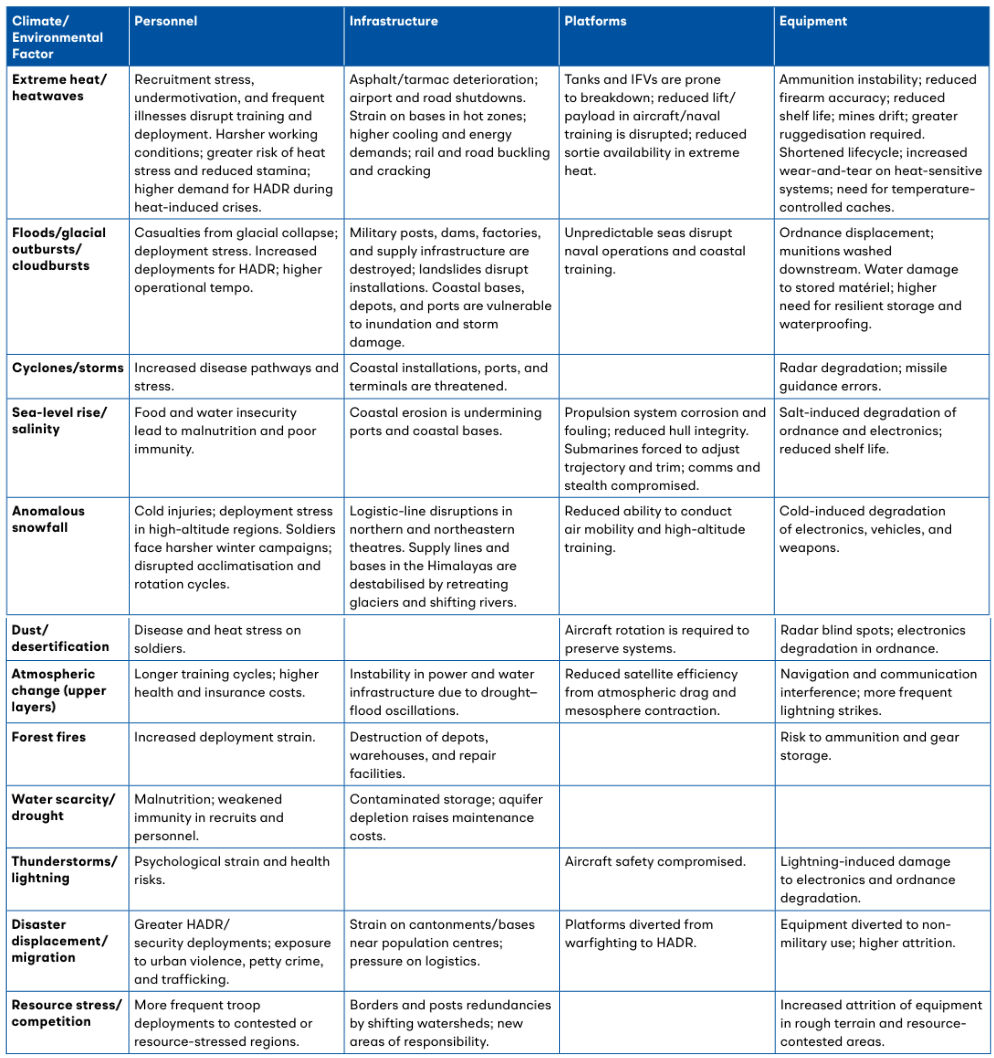
This report identifies the various factors that shape Indian military readiness and illustrates how climate change affects them. It uses the Cyclone Hudhud event to demonstrate the climate-induced challenges the region faces and their impacts on the Indian military, in significant material and financial terms. It also outlines the state of institutional discourse on climate security and readiness within the Indian military. The central contribution of the report, on how climate change impacts personnel, infrastructure, platforms, and equipment, draws on both qualitative primary and secondary research, particularly interviews with serving and retired senior officers across the three arms of the Indian military. The report highlights how a changing climate and environment threaten recruitment pools and training routines, destabilise supply lines and installations, degrade armour and engines, and limit the use of ordnance and ammunition.
Ultimately, this report aims to motivate the Indian military, like certain Asian and western counterparts, to expand beyond the developmental lens and integrate climate security considerations into its strategic acquisition and modernisation plans. Doing so will improve the institution’s operational effectiveness and ensure it meets its strategic objectives in a highly volatile climatic and geopolitical environment, as India stares down a ‘No War, No Peace’ continuum in South Asia.
Read the full report using the link here.
This report is published by the Clingendael Institute in collaboration with the Institute of Peace and Conflict Studies and is written by Siddharth Anil Nair.
See below for our coverage on similar topics:
- The Geopolitical and Environmental Risks of Deep-Sea Mining in the Indian Ocean
- Climate resilience reimagined: Integrating concepts of human and ecological security in South Asia
- India’s Institutional Cooperation on Climate Resilience in the Bay of Bengal Region
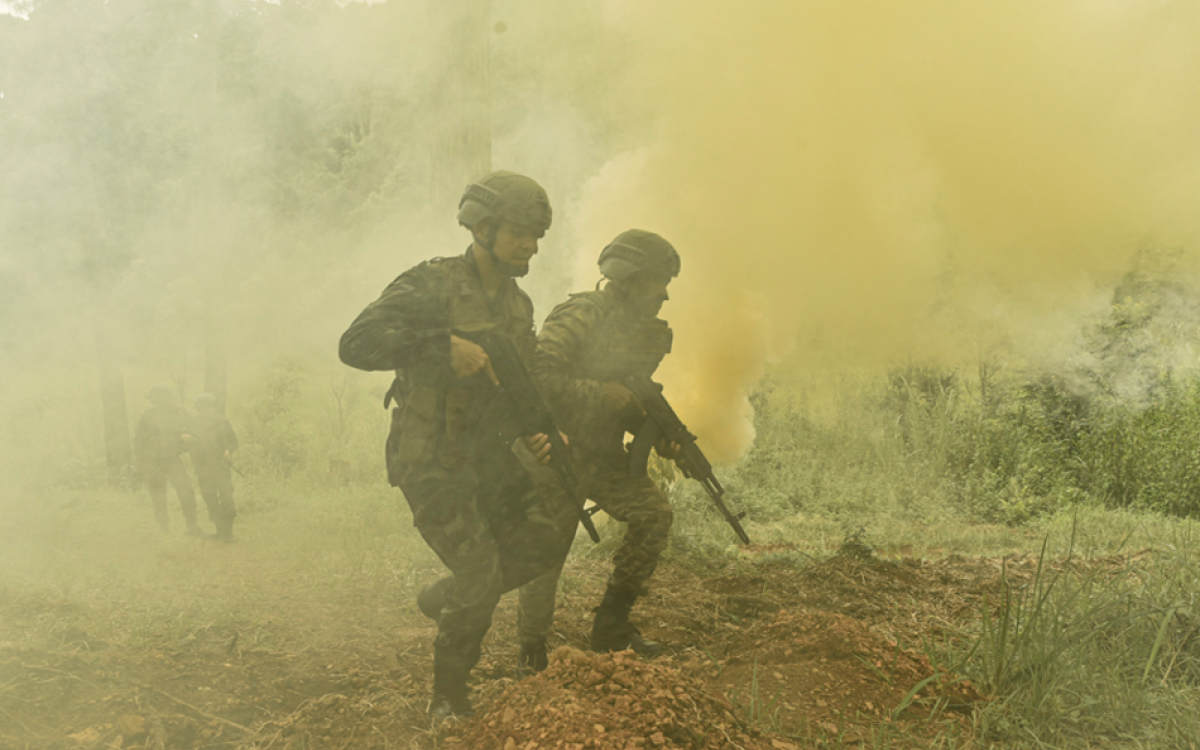
Cover photo: Indian Army and Royal Thai Army personnel take part in a joint military exercise at the Foreign Training Node in Umroi, in India’s northeastern state of Meghalaya on September 02, 2025. © Anadolu via Reuters Connect