
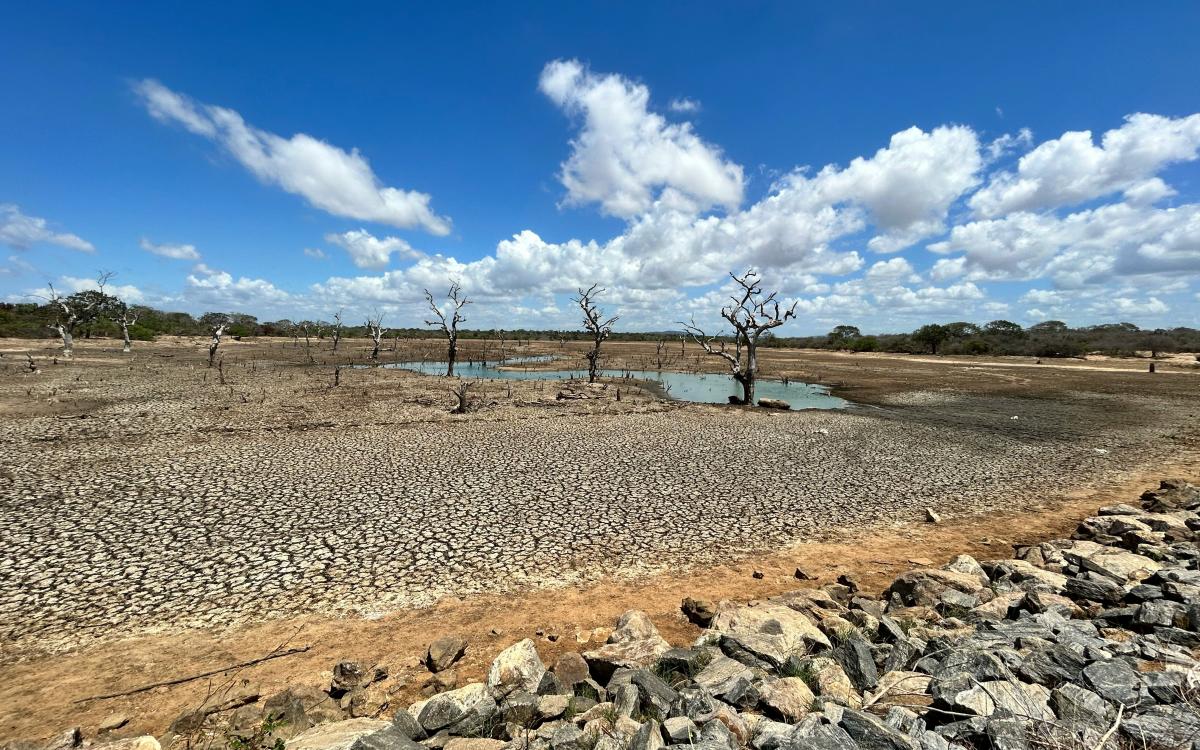
Policy Brief published by the United Nations Convention to Combat Desertification (UNCCD), 19 August, 2026.
Droughts are becoming harder to manage as a standalone environmental hazard. However, their impacts can move through land and water systems into food production, energy, transport, livelihoods, migration and, in already fragile contexts, political instability and conflict.
This new UNCCD policy brief argues that this is precisely why drought policy needs to change. Rather than creating a new policy silo, the authors call for a nexus approach embedded within existing institutions and planning frameworks: National Drought Plans, climate adaptation strategies, water-management frameworks, sectoral and development policies. The aim is to identify where vulnerabilities and policy choices in one sector can amplify risks elsewhere, and to act before these become cascading crises.
The brief shows why this matters through several very different cases. In the Sahel, drought interacts with land degradation, declining water and pasture availability, food insecurity, weak governance, displacement and conflict. While drought is not presented as a direct cause of political violence, the authors argue that instead, it can act as a threat multiplier by worsening existing socioeconomic and governance pressures.
In Mongolia, meanwhile, drought combines with severe winter conditions to threaten pastoral livelihoods. The response highlighted by the authors combines community-based pasture governance, seasonal mobility, climate forecasting, livestock insurance and anticipatory support - illustrating what a shift from emergency response towards long-term resilience can look like in practice.
The nexus is equally relevant beyond fragile settings. In the Mediterranean, for example, drought can interact sequentially with wildfire and flooding, while globally low water availability can constrain hydropower, inland shipping and cooling for thermal and nuclear power plants. Drought can therefore generate economic and infrastructure disruptions far beyond the areas directly experiencing water scarcity.
Main takeaways
- Govern the connections, not only the drought.
National drought planning should incorporate land, ecosystems, food security, energy, migration, health, infrastructure and development, rather than treating drought primarily as a water-sector issue. - Fix the institutional fragmentation.
Drought governance is often dispersed across ministries with overlapping mandates and weak coordination. The brief proposes designated lead institutions or cross-sector platforms with clear responsibilities and budgetary authority. - Invest before impacts cascade.
The authors argue that financing remains too fragmented and reactive. Early warning, ecosystem and watershed restoration, climate-resilient agriculture, water infrastructure and risk-informed planning can reduce losses while generating benefits across climate adaptation, livelihoods and societal stability. - Put land and water governance at the centre of resilience.
Healthy land systems determine how effectively landscapes retain water and withstand climatic shocks. Land restoration, sustainable resource management and stronger local governance can therefore reduce both drought exposure and the pressures that contribute to livelihood insecurity and resource tensions. - Make drought risk part of economic and security planning.
The brief calls for drought considerations to be mainstreamed into infrastructure, agriculture, aquifer governance, financial systems, national budgets and development strategies. Yet existing National Drought Plans still integrate areas such as security, energy and health comparatively weakly.
The broader message is that drought resilience depends as much on governance as on rainfall. Climate hazards become security risks through the systems they encounter: degraded land, fragile livelihoods, poorly coordinated institutions, weak early-warning mechanisms and insufficient investment in preparedness.
This summary is based on extracts from a Policy Brief written by Daniel Tsegai (UNCCD), Patrick Augenstein (UNCCD, The University of Bonn), Patricia Trambauer (Deltares), and Ana Nunez Sanchez (Deltares), published by the United Nations Convention to Combat Desertification.To read the full article, follow this link.
Photo Credit: Chamika Jayasri on Unsplash