
This paper by Irina Patrahau of the Hague Centre for Strategic Studies argues that the growing momentum to monitor supply chains for security reasons should be leveraged to strengthen sustainability reporting. The comment was published by ARES in June 2026.
Responding to the growing security threats on the continent, European leaders pledged to invest in the revitalisation and scale-up of defence-industrial capacity. At the same time, many European militaries, including the Netherlands, France and Sweden, pledged to reduce greenhouse gas emissions. The footprint of the defence industry is measured across the three emission scopes, including direct and indirect emissions from their own operations and from their supply chain.
The comment (short-format opinion piece) discusses the opacity of defence supply chains, which is a challenge to achieving both supply chain security and sustainability. A lack of information about the actors and processes involved in defence supply chains makes it difficult to effectively address the risk of disruption and to minimise the environmental footprint of the defence industry. The European defence industry has recently started to place more attention on systematically monitoring its supply chains to ensure security,
The paper argues that the growing momentum to monitor supply chains for security reasons should be leveraged strategically to strengthen sustainability reporting. Supply chain reporting increases the resilience of the European defence industry by enabling more effective identification of bottlenecks and targeted interventions. In doing so, sustainability goals, including carbon footprint assessments, waste management, circularity, and sustainable material sourcing, can be an add-on that yields significant benefits with reduced costs. This could contribute to a more sustainable defence industry, and it would support the defence industry’s social license to operate.
Key findings
Defence supply chains: opaque, fragmented, complex and sensitive
The paper argues that the opacity, fragmentation, complexity and sensitivity of information in defence supply chains have led to uneven monitoring practices up to now. Defence companies have set company-specific emissions-reduction targets and joined various global voluntary schemes to that end. As such, the depth of data collected and reported on is uneven.
In addition, despite some indirect and uneven progress, the defence industry has been excluded from stringent climate ambitions. On the one hand, this is to avoid interfering with the effectiveness of operational capabilities. On the other hand, reporting on emissions may unintentionally disclose other sensitive information about the location and activities of key suppliers of certain components and systems.
The urgency to start monitoring defence supply chains
The essay highlights the urgency of starting to monitor supply chains due to rising military threats, trade conflicts, and shifting global power dynamics. All of which have made the defence sector more susceptible to disruptions, ranging from raw material shortages and unforeseen price increases to restrictions on dual-use exports, including cyber security requirements. This is pushing prime contractors to identify, assess and bring into conformity suppliers across multiple tiers.
Dedicating resources, including human capital and financial support, to collect information on supply chain set-ups, assess vulnerabilities, and develop risk mitigation strategies and contingency plans is a key enabler of European military readiness. Geopolitical due diligence is an insurance against risks. The upfront premium required to achieve this goal should be weighed against the significantly higher cost of failing to mobilise and protect NATO.
Recommendations
To ensure that the increased European defence spending is done in a geopolitically resilient and environmentally mindful, understanding supply chains is crucial. The essay offers five recommendations for Defence Ministries to improve monitoring and achieve European readiness by 2030.
- Integrate monitoring in procurement requirements and commit to associated costs to ensure uptake
- Develop tailor-made monitoring concepts to create feasible targets
- Strengthen cooperation within the EU and NATO to avoid duplication and ensure a level playing field
- Draw lessons from other sectors to create benchmarks and synergies
- Leverage monitoring to reduce the defence industry’s environmental impact and increase social acceptance
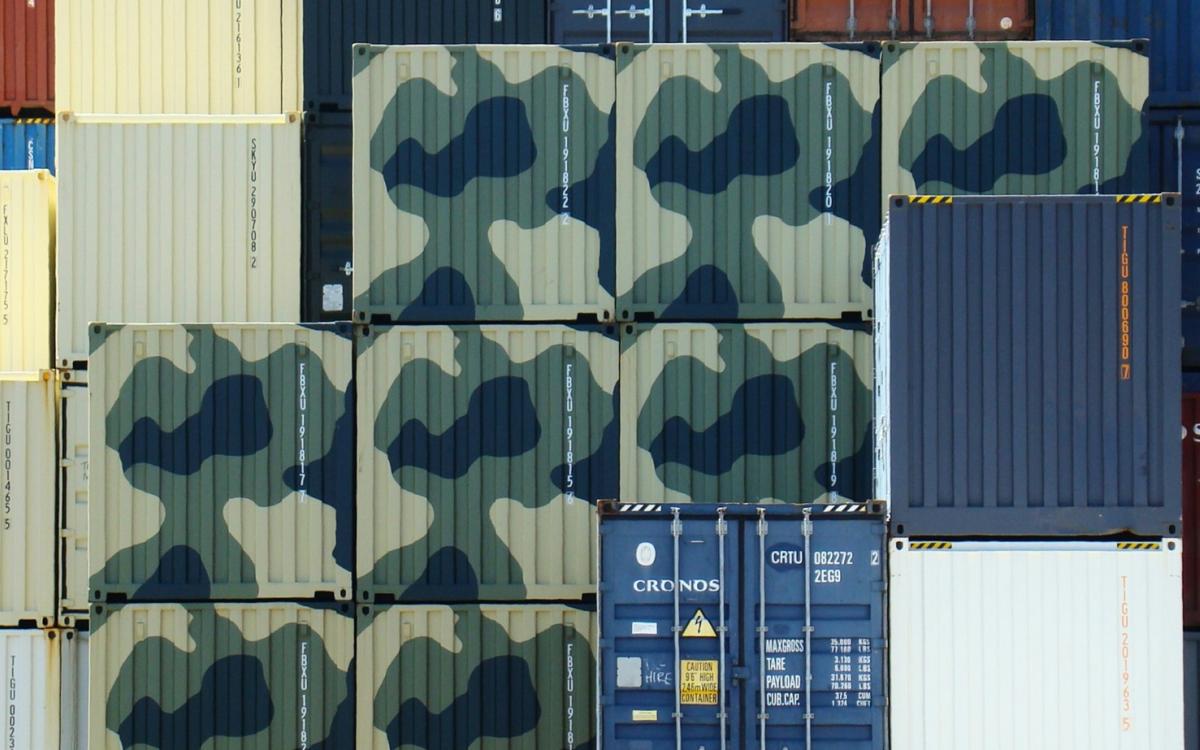
Photo by Iain on Unsplash
This text is based on extracts from an essay published by ARES. To read the full contribution, follow this link.