
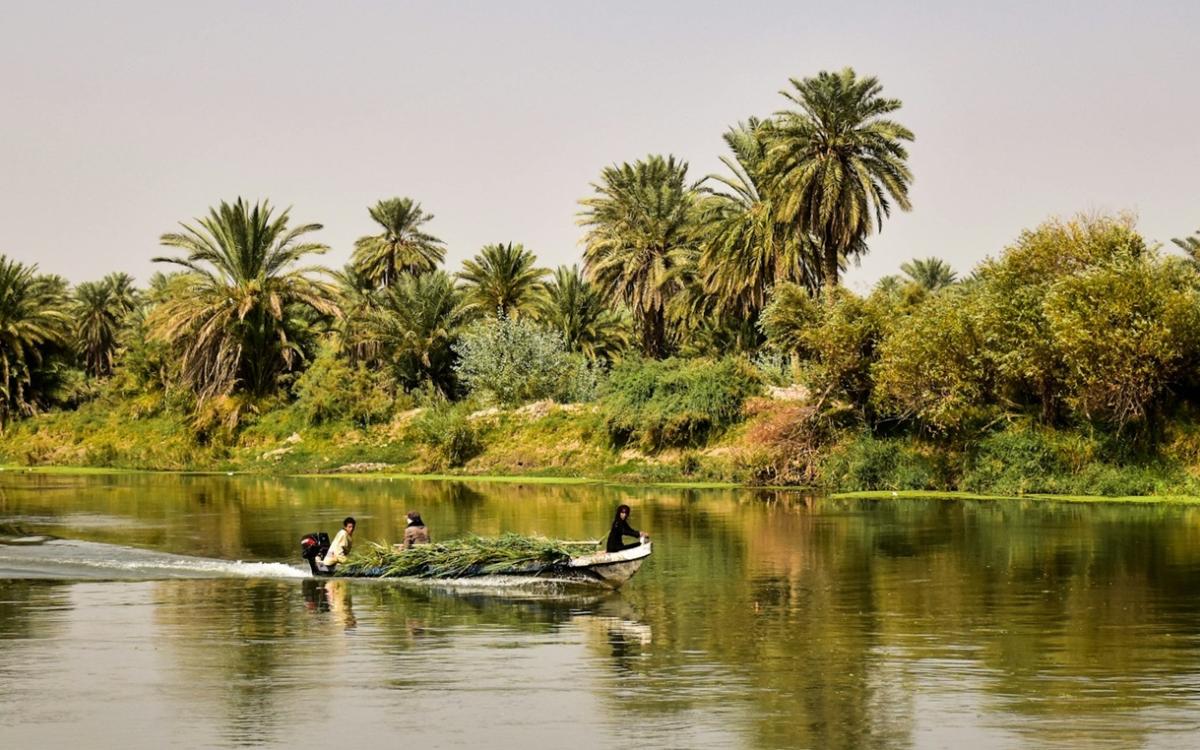
Episode 4 of the ‘Climate, Crisis and Courage’ podcast, produced by the United Nations. Hosted by Nazanine Moshiri, who speaks to Andrea Dekrout and Peshtiwan Al-Dawoudi of the Berghof Foundation. The podcast was published on June 12th.
Iraq is facing a deepening water crisis, driven by years of conflict, drought, rising temperatures, and pollution. Communities experience the direct impacts of climate change, such as failed harvests and rising water salinity. These issues are tangible and worsen in summer heat, visibly drying fields. Iraq's water stress is exacerbated by upstream river management in Turkey, Iran, and Syria. Managing these water, agriculture, and displacement challenges requires trust and state capacity; however, internal conflicts and institutional challenges hinder long-term water governance and advocacy. For many communities, water shortages are reshaping daily life, especially for young people.
Water scarcity and internal displacement intensify competition for water resources. Difficult government decisions about who gains access to scarce water erode trust between communities and the government. Water is essential for daily life and food production, yet decision-makers often lack sufficient information. This scarcity heightens social tensions and governance challenges. People perceive water as being used unfairly or inefficiently, leading to unrest. This undermines public trust and threatens Iraq’s internal peace and stability. One of the biggest risks is youth hopelessness, which can lead to harmful coping mechanisms, including violence, as they see no future or role. The economic hardship triggers a chain reaction:
Weaker livelihoods, rising costs, and mounting debts push youth towards quick money and belonging, sometimes through violence.
Takeaways for change
Cooperation: Shared cross-border river ecosystems require coordinated, transboundary climate adaptation. Regional cooperation is essential for sustainable water management. Furthermore, internal collaboration in addressing this crisis can reinforce both local and global communities.
Recognition: Using science-based information can help build trust and cooperation to address water scarcity collaboratively. Starting solutions involves listening and recognising shared climate impacts felt differently by communities.
What is being done:
- At the national level, the Iraqi government has introduced a national climate plan and is working on a national adaptation process. These policies shape priorities, funding, and urgency for water issues. The speakers in the podcast argue that these policies must be inclusive and conflict-sensitive, and must reflect community needs to achieve effective water policies, with communities not only being passive recipients but becoming active agents.
- The podcast notes that the UN and development partners can assist the government in mediating natural resource management to support livelihoods. It also suggests that the UN should emphasize that climate change and resource management are central to peace and security, which can foster more resilient communities.
Photo by أخٌفيالله on Unsplash
This text is based on extracts from Episode 4 of the ‘Climate, Crisis and Courage’ podcast, hosted by Nazanine Moshiri, who speaks to Andrea Dekrout and Peshtiwan Al-Dawoudi of the Berghof Foundation. To listen to the full episode, follow the link.