In the Central Sahel, climate commitments are hampered by a lack of coordination and finance, while insecurity puts further pressure on the region. Can COP26 help address some of these blockages?
Can the Taliban address climate-related risks in Afghanistan? In the wake of the Taliban takeover, Afghanistan is confronted with various risks to human security and hard security, especially in the context of climate change. Climate-related security risks have been increasingly manifesting and aggravating the drivers of violent conflict. For example, the impacts of more frequent and intense droughts on depleting groundwater sources and natural reservoirs are a huge threat to the water supply of many communities.
The Climate Security Expert Network (CSEN) has recently published a new climate-fragility risk brief on Libya. The risk brief provides a holistic overview of the climate-fragile state in the country.
More than just altering the environment, climate change is threatening to permanently and dangerously reshape the global security landscape, according to a series of new assessments by U.S. military, intelligence and security officials.
The reports, ordered earlier this year by U.S. President Joe Biden as part of an effort to better confront the impact of climate change, warn no country will be spared, and that some parts of the world already may be reaching a tipping point.
Climate-related security risks pose grave challenges to peace and stability in South Asia. The intensified effects of climate change have serious human and regional security implications for India. It is therefore imperative for India to rethink its existing perspectives on climate security that are unhelpfully hinged on the United Nations Security Council (UNSC) debates. India has been persistently critical of discussing security implications of climate change in the UNSC.
Improving Security and Climate Resilience in Fragile Contexts through the Water-Energy-Food Security Nexus or 'FREXUS' is a new project co-funded by the EU and Germany, aims to improve security and climate resilience in fragile areas of Mali, Chad and Niger. The Sahel region has seen a deterioration of the security situation recently, with many conflicts linked to climate change and natural resource usage.
The Institute for Economics and Peace (IEP) has released its second edition of the Ecological Threat Report (ETR).
In June 2020, the Committee on Migration, Refugees and Displaced persons in the Council of Europe tabled a motion for a new resolution, wherein the Parliamentary Assembly of the Council of Europe would study the growing relationship between climate change and migration.
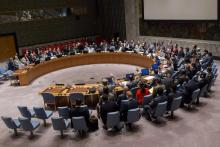
On 23rd September 2021, the UN Security Council held a high-level open debate on climate and security under the Chairmanship of Ireland. The provisional agenda for the 8864th meeting of the Security Council focused on the maintenance of international peace and security: Climate and security.