This study explores entry points for WFP to, in addition to its core humanitarian mandate as a first responder, contribute to building climate-resilient food systems and sustainable peace in the West Nile sub-region of Uganda.
How to respond to anticipated climate change is a defining challenge across nearly every field and scope of human activity. Peacebuilding is no exception. While many have identified ways that climate change or environmental degradation might affect peace and security concerns, how to best respond to these so-called ‘climate-security’ challenges is still an emerging area of practice within the peacebuilding field.
The Horn of Africa has seen its fair share of catastrophes, from natural calamities to man-made crises. The region is considered one of the world’s most fragile, tumultuous, and impoverished regions. Its nations are among the most vulnerable and ill-equipped to deal with climate change threats and shocks. The past 40 years have seen the Horn of Africa battered repeatedly by droughts, famine, and the resulting epidemics.
On February 9th, the Geological Survey of India announced it had discovered 5.9 million tons of lithium, a metal in high demand for electric vehicle batteries and other low-carbon energy technologies. Though the findings are preliminary, if borne out, the discovery would put India among the world’s top holders of lithium, with significant implications for India’s own electric vehicle (EV) deployment, environmental management, and energy independence.
The increasing pressure of ecological disruption on people and on security means that ideas and policy on peace and security must increasingly address the need for ecological security.
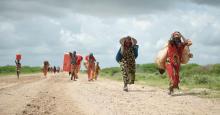
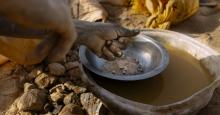
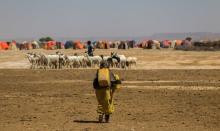
The Horn of Africa is experiencing a historic drought. Now in its fifth failed rainy season, with a sixth projected to fail in early 2023, 26 million people are expected to enter crisis levels of food insecurity or worse in Somalia, Kenya and Ethiopia. Climate change is exacerbating humanitarian crises and leading to increased mobility, displacing millions each year throughout the Horn of Africa.
Climate change is altering security landscapes around the world. West Africa is experiencing climate change at rates faster than the global average. Climate change is also interacting with regional political tensions, violent conflicts and complex humanitarian emergencies. As changing climate conditions impact natural resource availability, biodiversity and agricultural productivity, low levels of resilience are magnifying the human security implications of climate change in West Africa.
In southern Iraq, decades of water insecurity have influenced migration patterns by endangering agricultural output and the livelihoods of farmers. Although global migration is – contrary to popular discourse – remarkably stable, representing on average 3% of the global population in the last 50 years, the majority of people tend to migrate within rather than across borders. 30 out of the 40 million global internal displacements in 2020 were related to water-related hazards.
The Inner Niger Delta is home to over two million people working in agriculture, livestock herding, and fishing. People depend on the water from the Delta for food security, livelihoods and daily life.
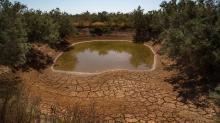
Climatic stressors like drought, the associated decline in rainfall and increased flooding negatively affect already vulnerable communities, and current predictions show the situation will worsen for future generations.
The vast Sahelian region of the Liptako Gourma—which spans the three-way frontier among Mali, Burkina Faso and Niger—is in the grips of a complex humanitarian and security crisis that is endangering the lives of millions.