
Global Head of Climate
Advisory at J.P. Morgan
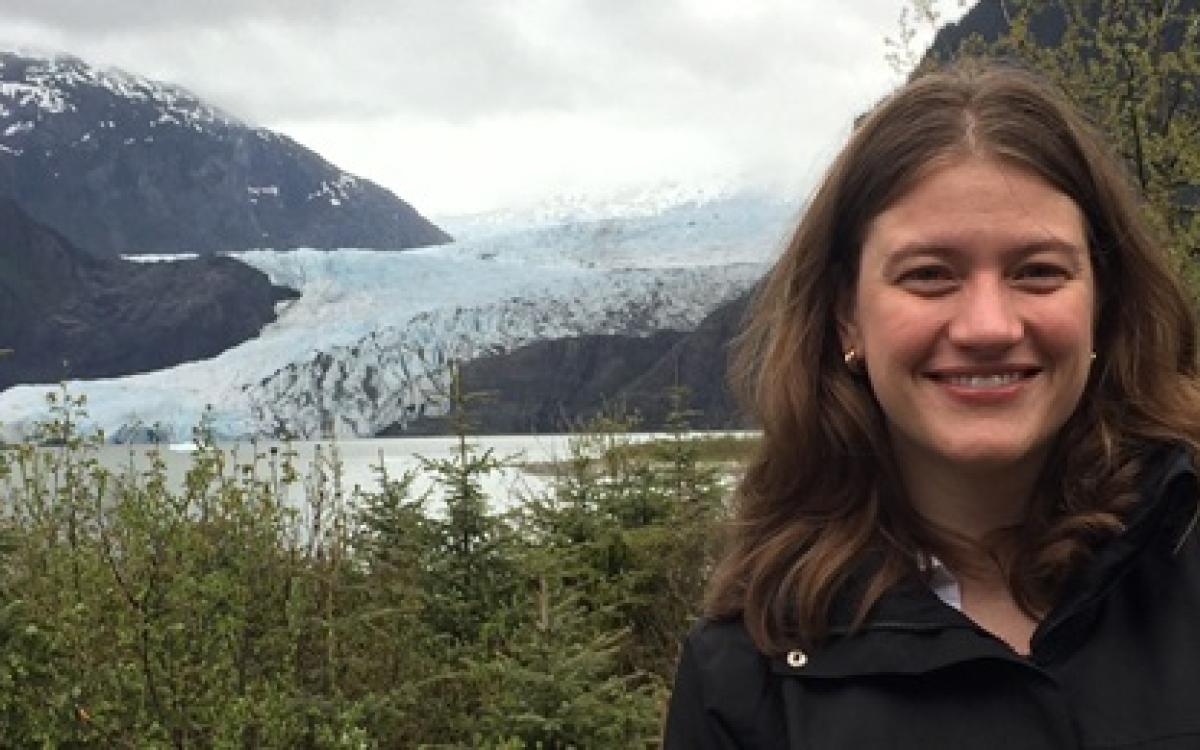
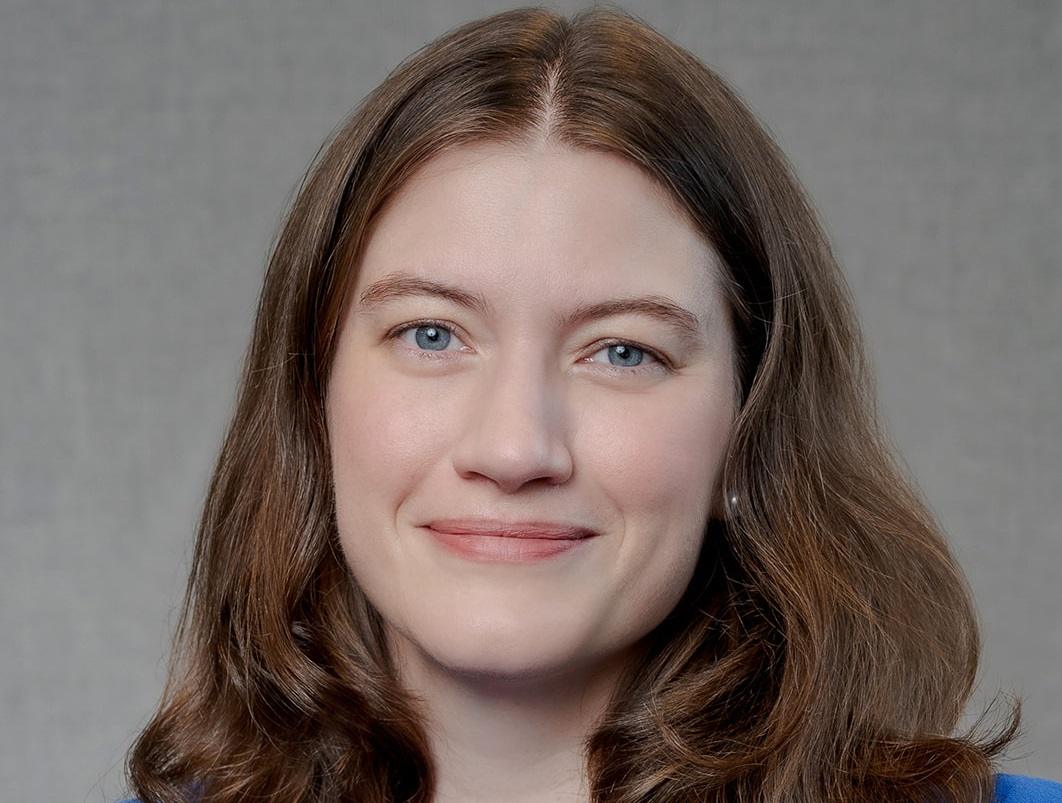
In November 2025, the Planetary Security Initiative (PSI) sat down with Dr. Sarah Kapnick, Global Head of Climate Advisory at J.P. Morgan. With a background bridging climate science and finance, Dr. Kapnick offers an insightful perspective on how scientific knowledge and financial strategies can work together to build resilience against climate risks. Prior to her role at J.P. Morgan, she served as Chief Scientist at the National Oceanic and Atmospheric Administration (NOAA), responsible for guiding the programmatic focus of NOAA’s science and technology priorities. Her expertise is crucial to understanding the nexus between climate science, financial markets, and security, making her insights highly relevant to PSI’s mission. In this exclusive interview, Dr. Kapnick discusses the importance of integrating scientific data into financial decision-making, managing climate risks, and fostering resilience in the face of growing climate security challenges.
You have navigated both the public sector as a NOAA chief scientist and now the private sector as a global head of climate advisory. What motivated you in this transition and how does your scientific training inform your advisory work in finance?
Coming to JPMorganChase was less of a transition and more of a culmination. I was always interested in the intersection between climate and finance, but throughout my career, I didn’t see many places where they met. My current role blends both of these in a way that is useful and actionable for our clients and the global business community.
Twenty-five years ago, I started to see this intersection as it manifested in insurance and catastrophe bonds. As a junior investment banker, I covered financial institutions and insurance exchanges. I structured products for long-tail risk, including catastrophe bonds. Essentially, a catastrophe bond is a financial structure that acts like insurance or reinsurance but is sold on the open market. Investors can buy catastrophe bonds to gain exposure to extreme weather or natural hazards or other loss events, with expected statistics on those losses. This bond transfers the financial risk of catastrophic events from insurers or governments to investors willing to take those risks in exchange for potential returns. I was fascinated by how climate information could influence finance, which sparked my interest in studying the science further.
After earning my PhD in Atmospheric and Oceanic Sciences at UCLA, I worked at NOAA (National Oceanic and Atmospheric Administration) for a decade, where I led Research & Development (R&D) around building high-resolution climate models.
Leading this work for U.S. government, I saw that climate data was underused in finance and corporate environments. That inspired me to go back into the private sector. Now, I help clients understand how climate science can be used strategically and work with decision makers on resiliency plans.
How do climate models inform the foundation of insurance?
Weather and climate information are the foundation of catastrophe models used in property and casualty insurance. These sophisticated financial models of physical risk rely on scientific data to determine whether a natural disaster may lead to financial loss - for example, using a predetermined tide level or wind speed.
Catastrophe risk models historically required continuous updates from observations to reflect evolving scientific knowledge and recent events. Work underway at many firms now also includes climate model simulations to also incorporate climate change impacts on hazard patterns not reflected yet in observed disasters. Therefore, weather and climate information deeply underpin insurance.
Would you say that the growth of catastrophe bonds has partly been due to the improved integration of climate science into the financial sector?
That is part of it. It also helps diversify pools of risk, which we are seeing an increased need for in the insurance and reinsurance space. As discussed in a recent J.P. Morgan article of mine titled Climate Intuition: The future of homeowners insurance, the insurance industry is facing escalating insured losses over time. Insurers are finding new ways to manage loss events so they can protect their businesses.
When working with clients, how do you balance rigorous scientific standards within the climate models and commercial imperatives of the financial sector?
They are not at odds, but rather work together. It is based on collaboration between data providers, clients, and our own experts and the need for science-based decision making. In the financial sector, decision-makers look at trends and the current understanding of the field in science, which then informs their investments and strategies. In many ways, the work that I do now is very similar to the work I did as a chief scientist: I needed to have an opinion on where the best science is today and where innovation is going to come from.
We should always ask ourselves where uncertainties are and make choices with built-in flexibility. I often say that my role coming into meetings and discussions is to help leaders think like scientists; using the best data available to make the best possible decision today. But I also encourage leaders to recognize that as more information becomes available, they may need to change course.
Does science-based decision-making in the US private sector differ under various administrations?
In the United States, presidential terms are every four years. When you are thinking about a company over a 10-year timeframe, that could mean two or three different administrations.
The intersection of national security, defense and climate creates steady pressures that are probably not going away, and there is an interest in navigating that area.
How can the same climate science information lead to different interpretations and decisions among companies or stakeholders?
Climate science is one of the few areas where you have an idea of what the future looks like, due to physics, in a way that we do not have in any other areas. But while we can provide leaders with the best information, we must remember that the interpretation is up to the individual.
For example, in one meeting with two different clients where I provide the same scientific information, their interpretation of what that means for the world and their business could be completely different due to their individual perspectives, personal experiences, policy views, timeframe and priorities. This can be frustrating to scientists [laughs] but everyone needs to have that process.
More broadly, do you think there will be any climate-driven regulatory or market changes that the financial sector must anticipate, or that will affect the financial sector? And how do you help J.P. Morgan prepare itself and its clients for these shifts?
There have been increases in disclosure requirements in Europe. Meeting these requirements requires a deep understanding of their business and thorough climate risk management analysis, and companies plan for that.
Overall, we tell clients to think about their guiding principles that will be able to transcend different political and regulatory landscapes. For large multinationals, this means strategically considering how to be a good, productive business over the long term while navigating these complex regulatory and political spheres.
You have written about the nexus of geopolitics, climate security, and finance – could you tell us more about that and why they are important considerations for business leaders?
In the same way that climate is becoming something that everyone needs to understand in business, geopolitics is as well, in part due to trade tensions and conflict in recent years. In my work, I recognize the need for geopolitical understanding because geopolitics leads to behavior that is not always completely financially rational. Focusing solely on financial costs overlooks how geopolitical shifts will influence economic outcomes.
In September, I co-authored a paper with J.P. Morgan’s Center for Geopolitics on Climate Intuition: Power Rewired: The new map of energy and geopolitics, which explains how energy markets are changing due to geopolitics. Through a geopolitical lens, it is not about how quickly countries will decarbonize, but how quickly they will become self-sufficient in energy. This may mean an increased use of fossil fuels, but also the development of more solar, wind, geothermal, and potentially nuclear.
Do you see companies responding to geopolitical events by pulling back and simplifying global supply chains that span multiple markets and national contexts, or are many still willing to accept those risks in this new geopolitical era?
There is a strong desire among companies to better understand the complexities of geopolitical risk and to start planning for it, particularly among large companies with under-diversified supply chains. Increasingly, investors are asking companies to develop plans to manage these risks, especially after supply shocks caused by events like COVID, tariff changes, and ongoing conflicts in Asia and Europe.
Looking ahead, what are some critical technologies that you see as promising from an investor perspective?
One of the examples that I've seen recently is the development of ocean technologies and uncrewed systems. These technologies have a long history of development for information collection, which was either used for seasonal climate prediction or conservation efforts. In the last two years I have seen a lot more interest in using uncrewed systems for other applications including defense, shipping, navigation and port operations. This is a great example of a dual-use technology, which has applications in both climate security and other sectors.
Climate technology funding remains strong, especially in energy generation, grid modernization, and industrial decarbonization. Investment trends show a move towards later-stage funding rounds with continued interest from both domestic and international investors.
How are these dual-use technologies attracting interest from investors?
Dual-use technologies have the advantage of accessing two different types of investors, which increases their potential for growth through diversified funding sources. For example, early-stage companies may find it easier to raise funds if their technologies have both civilian and military applications. Investors show significant interest in this intersection because venture capital funds typically have investment lifetimes of around a decade, aligning well with the longer development cycles of dual-use technologies.
This dynamic creates strong incentives for companies to develop versatile technologies that can appeal to a broader investor base and accelerate their growth trajectory.
Do you have any final words for us?
The reason I have this job as the global head of climate advisory is that there is demand for someone with my expertise and capabilities to help our clients. Interest in using scientific information has increased for near-term, multi-year, and multi-decade business planning. Investors want to be ahead of the curve either through their R&D or through their long-term strategy.
Through science, we have an idea, a fuzzy crystal ball, of what the world is going to look like. We can use that information to plan and set ourselves up for success for the years to come. I think those who start planning for the risks earlier are also the ones who may realize the business opportunities sooner. Those who do not do that will be surprised at what comes, even though we have science right now. So, my view is that if we create great science and we put it out there, but we do not use it, it may be better not to have it at all.
About this series:
In recent years, PSI has conducted interviews with several climate security practitioners. See below for an overview of interviews conducted between 2023 and 2025:
Bertram de Rooij: In our interview with Bertram de Rooij, researcher at Wageningen University & Research and practicing firefighter, we explored wildfire management in the context of climate change. He discussed the critical role of proactive spatial planning and nature-based solutions in mitigating wildfire risks, emphasizing their integration into early urban development stages. De Rooij also addressed institutional challenges like fragmented land ownership and societal resistance, underscoring the need for collective responsibility and policy commitment to enhance environmental resilience against intensifying wildfires.
Johnson Nkem: In our interview with Johnson Nkem, Senior Climate and Security Advisor at the United Nations Mission in South Sudan (UNMISS), we explored how climate change intensifies local and cross-border insecurities in one of the world’s most fragile contexts. He discussed the central role of water governance, renewable energy, and livelihood adaptation in strengthening resilience and peace. Nkem also reflected on the evolving recognition of climate security within the UN and the need to balance defence, development, and diplomacy in a rapidly changing climate landscape.
Johanna Lauritsen: In our interview with Johanna Lauritsen, Environmental Coordinator at the Civilian Operations Headquarters of the EEAS, we explored her efforts to mainstream environmental considerations across EU civilian CSDP missions. She highlighted the progress made in integrating sustainability into both internal operations and external tasks, including tackling environmental crime, managing environmental risks, and improving green procurement. Lauritsen also reflected on the importance of staff training, interdepartmental collaboration, and the challenges of working in complex and often unstable environments.