
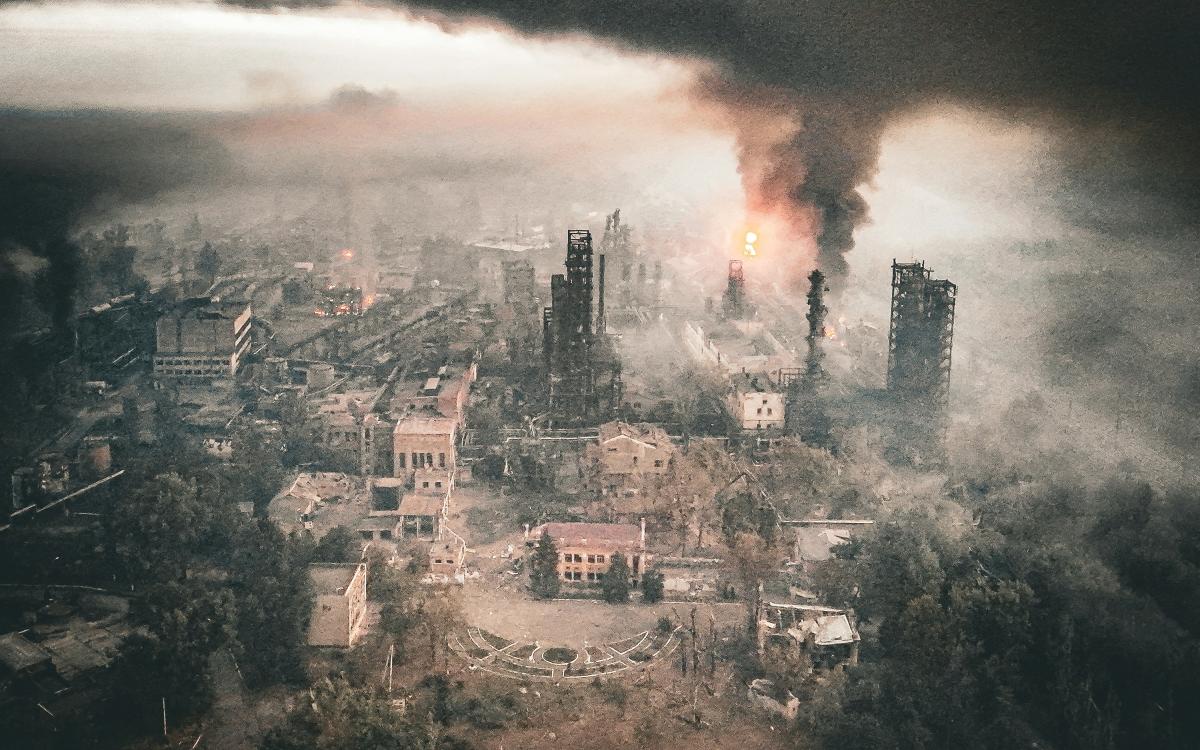
Report published by the Conflict and Environment Observatory (CEOBS), November 2026
Four years into Russia's full-scale invasion, fires, blasts and spills at damaged sites risk releasing fuel, toxic chemicals and explosive residues into the surrounding environment, with consequences that may outlast the fighting. Since February 2022, CEOBS has been building a systematic record of this damage through its Wartime Incidents to Environment Database, or WISEN. Drawing on four years of data, the report examines the scale, geography, timing and character of that harm.
Four years of environmental harm in Ukraine
By 24 February 2026, WISEN-Ukraine had recorded 3,697 damaged facilities, with 2,692 verified incidents assessed for environmental risk, 595 of which have undergone more detailed assessment of observed or reported harm.
The data shows four characteristics of the harm:
- Widespread: Damage has been recorded throughout the country. While most is on land, 80 incidents occurred at sea and a further 268 within 5 km of the coastline.
- Diverse: Affected sites range from substations and ammunition depots to grain stores, livestock farms, fuel depots and bridges. Patterns also shift over time: agricultural storage was hit hardest in 2022–24, while damage to energy infrastructure climbed sharply from summer 2025. Some incidents caused immediate, highly visible damage, while others created risks that may persist for years.
- Locally severe: Incidents are concentrated in frontline areas and in regions that have been occupied or struck repeatedly. Approximately 65% of the damaged facilities were located in occupied areas or within 25 km of the frontline, and some individual incidents, particularly at chemical facilities, have been assessed as causing substantial harm.
- Frequently cumulative: Repeated attacks compound existing environmental damage by introducing further contamination, while wartime pollution exacerbates Ukraine’s longstanding industrial pollution, much of which dates back to the Soviet era. Much of the destruction concerns essential infrastructure and resources that support civilian livelihoods and local economies.
From harm to recovery and accountability
The toll is still growing, with strikes on energy infrastructure since summer 2025 pushing assessed risk to some of its highest levels. WISEN-Ukraine helps pinpoint pollution hotspots and prioritise clean-up, and will feed into new research on conflict pollution, soil health and air quality. Its records can also inform assessments of war damage, reparations and investigations into serious environmental harm, and support the advocacy of Ukrainian environmental groups, who have long argued that Russia must answer for the damage its war has caused. But documentation is only a first step: a just and sustainable recovery depends on sustained international support for monitoring and remediation.
The data is freely available on Zenodo, with detailed records available on application.
This summary is based on extracts from a report published by the Conflict and Environment Observatory (CEOBS) and written by Iryna Babanina (CEOBS), Eoghan Darbyshire (CEOBS), Jonathan Walsh (CEOBS), Linas Svolkinas (CEOBS) and Leon Moreland (CEOBS). To read the full report, follow this link.
Photo credit: Serhii Kalyn / Unsplash