
Briefer published by the Council on Strategic Risks, 13 August, 2026
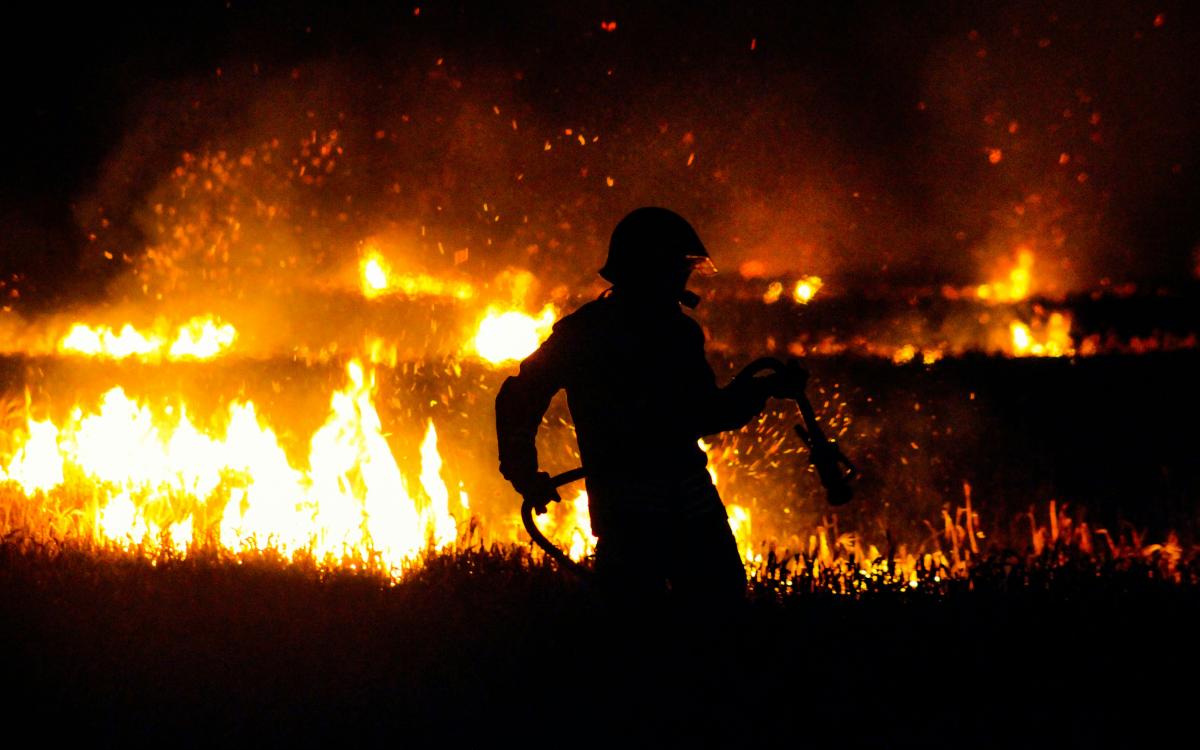
From Spain to South Korea, armed forces are being called in more frequently to respond to wildfires.
A new briefer by the Council on Strategic Risks looks at what this means for defence as wildfire seasons become more intense, less predictable and increasingly difficult to contain.
The scale of military involvement is already significant. Between January and July 2026, armed forces were deployed more than 110 times across 49 countries to support wildfire response. In Europe alone, there were more than 30 military deployments in June and July.
The authors argue that this creates challenges that go well beyond the immediate task of fighting fires.
Military assets used for disaster response are also assets that may be needed elsewhere. Wildfires can disrupt training and operations, threaten military installations and place pressure on transport, energy, water and communications infrastructure that armed forces depend on.
These risks are already visible in Europe. Earlier this year, fires broke out on Dutch military training grounds, including an artillery range. The Netherlands requested European firefighting assistance for the first time, while the Ministry of Defence subsequently announced that it would revise training protocols during periods of elevated fire risk.
Spain, meanwhile, offers one of the most institutionalised approaches to military disaster response. Its Military Emergencies Unit (UME), established in 2005, has around 3,500 personnel dedicated to responding to natural disasters and other emergencies. Around 70% of its deployments up to 2021 were related to wildfires. The unit has also increasingly supported operations abroad.
The authors contrast this with countries such as Indonesia, where the military does not maintain a dedicated wildfire unit but is integrated into a broader civilian-led response system.
The European dimension is particularly relevant. The EU's new wildfire strategy foresees a permanent rescEU fleet of firefighting aircraft and helicopters. While the system remains civilian-led, some of these assets will be operated by member states' armed forces, highlighting how European disaster preparedness increasingly depends on both civilian and military capabilities.
The authors therefore argue that governments should move from ad hoc military deployments towards more structured responses. This means building models in which armed forces reinforce civilian-led response, investing in wildfire-specific training, joint exercises and risk assessments for military installations, and putting in place interoperable systems and pre-arranged cross-border assistance before multiple countries are hit at the same time.
Main Takeaways
- Wildfire response is becoming a regular military task.
More than 110 military deployments were recorded across 49 countries between January and July 2026, showing how frequently armed forces are now being called in. - Wildfires can also disrupt core defence activities.
Fires can affect training grounds, military installations and the energy, transport and communications infrastructure on which armed forces depend. - There is no single model for military involvement.
Spain relies on a specialised military emergency unit, while countries such as Indonesia integrate military capabilities into broader civilian-led response structures. - Preparedness matters as much as emergency response.
The authors call for more joint training, installation-level risk assessments and pre-arranged cross-border cooperation, while keeping civilian authorities in the lead.
This text is based on extracts from a briefer written by Erin Sikorsky (Director, the Center for Climate and Security, Council on Strategic Risks), Katherine Yusko (Center for Climate and Security), and Abby Reiner (Center for Climate and Security), and published by the Council on Strategic Risks. To read the complete piece, follow the link here.
Photo credit from Fabian Jones on Unsplash.