
Commentary published by Carnegie Endowment for International Peace, September 17, 2026.
In a reconfigured geopolitical landscape, the UN Security Council faces significant geopolitical deadlock. While this is perhaps most apparent in relation to the conflicts in Ukraine, Gaza and Iran, these divisions have also extended to discussions of the security implications of climate change, despite growing recognition that climate change can exacerbate resource competition, food and water insecurity, and displacement-related tensions.
The current impasse builds on years of disagreement over the UN Security Council's role in addressing climate-related security risks, as exemplified by the discussions surrounding the 2021 climate-security resolution (read more here), and more recently with the Trump administration stepping back from identifying climate change as a national security issue (read more here).
However, in this new commentary, the authors note that five newly elected non-permanent members that have expressed support for integrating climate, peace and security into the Council's work (Austria, Kyrgyzstan, Portugal, Trinidad and Tobago, and Zimbabwe) may provide renewed opportunities to advance the climate-security agenda. To do so, the authors propose what they call a "cumulative normative strategy", which "advances gradually stacked rules, standards, and expectations that could produce long-term systemic shifts." Specifically, they suggest to:
- Expand Climate Change, Peace, and Security Language into Country-Specific Resolutions. Continue incorporating climate, peace and security references into country-specific resolutions, and where possible broaden it to other language that might encounter less resistance, such as food security, water security and resilience.
- Launch Investigations on the Relationship Between Climate, Peace, and Security in Specific Contexts. In the light of previous critiques on the lack of empirical evidence on the climate, peace, and security nexus, it is recommended to strengthen the evidence base. Specifically, investigations on climate-security related impacts, such as droughts, water scarcity, and food insecurity, might have a greater opportunity to foster broader political support. Where formal investigations are not possible, use Arria-formula meetings to keep the issue on the agenda.
- Request the Creation of a Special Adviser to the Secretary-General on Security and Resilience. The authors recommend establishing a UN Special Adviser on Security and Resilience. Distinct from the Special Adviser on Climate Action and Just Transition, whose focus is on climate finance, this position would help strengthen attention to climate-security risk, while also assisting the Secretary-General in ensuring strategic coherence and high-level engagement on climate-security issues. Positioning the role around security and resilience, rather than climate change per se, could help build broader political support.
- Advance Procedural Actions to Draw Attention to Climate, Peace, and Security Links. Beyond substantive decisions, the Security Council can use procedural measures, including high-level debates and briefings, to keep climate-security issues on the agenda. The authors argue that these actions can help build momentum for the future integration of climate, peace and security considerations into more substantive and legally binding Council outcomes.
Taken together, these recommendations reflect a gradual approach to advancing the climate-security agenda in a period of geopolitical deadlock. Rather than seeking immediate breakthroughs, the authors advocate gradually building the evidence, norms and institutional structures needed for stronger Security Council engagement with climate-related security risks in the future.
This summary is based on extracts from a commentary published by Carnegie Endowment for International Peace and written by Shana Tabak (Carnegie) and Alejandro Martin Rodriguez (Carnegie). To read the full article, follow this link.
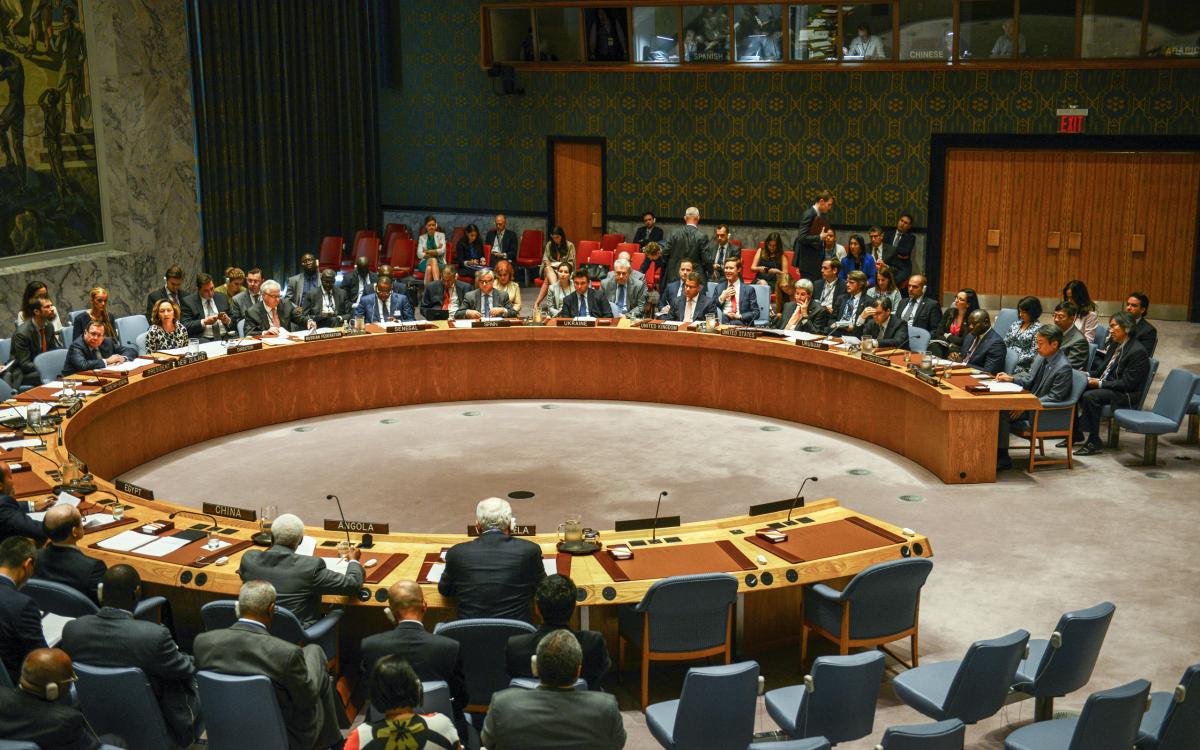
Photo Credit: Astrid Riecken / CTBTO, “23 September 2016: Security Council Meeting at United Nations,” via Flickr licensed under CC BY 2.0