
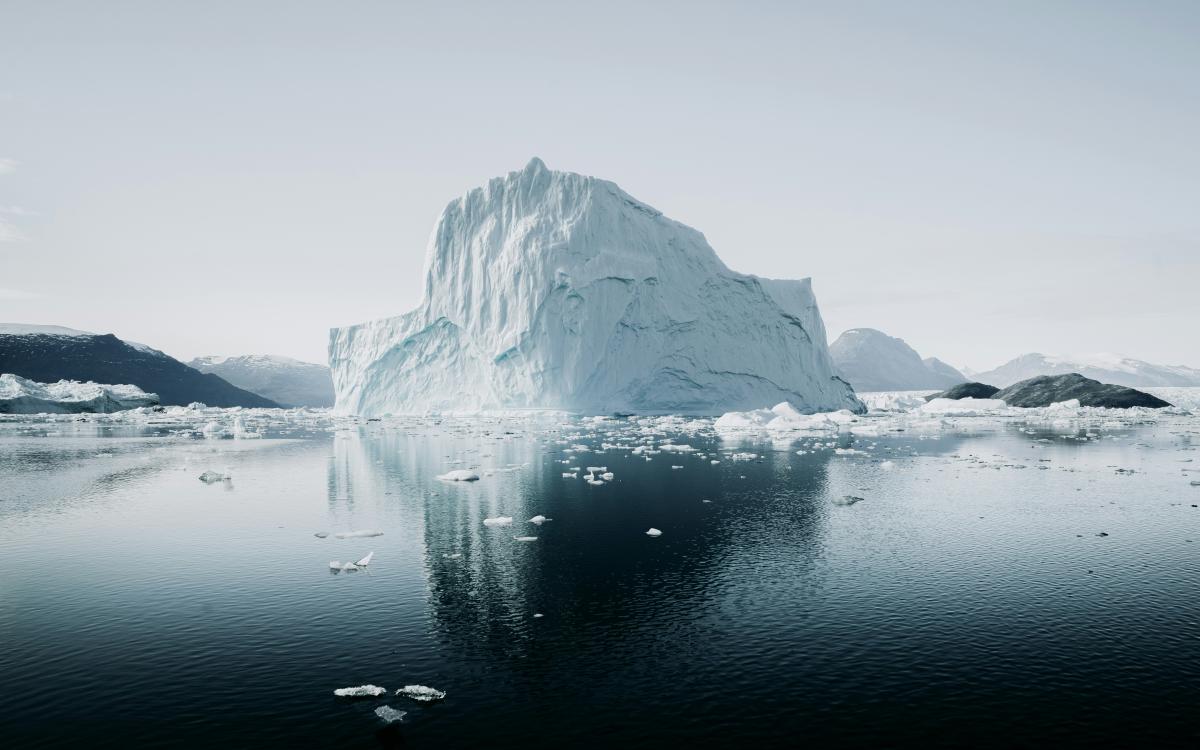
Report published by Observatoire Défense et Climat and the Institute for International and Strategic Affairs, October 2026
While much attention has focused on how major powers seek to mitigate or adapt to climate change, less attention has been paid to those that view certain climate impacts as strategic opportunities. A new report by the Observatoire Défense et Climat and the Institute for International and Strategic Affairs examines this dynamic through the concept of "climate opportunism", offering an analysis of how Russia incorporates climate change into its geopolitical and security strategy.
The cascading effects of climate change in Russia
Russia faces a wide range of environmental effects due to climate change, from gradual processes such as permafrost thaw and sea-level rise to more immediate threats, including increasingly frequent and intense extreme weather events. These changes have cascading consequences for agriculture, the economy, public health and social stability. Rising temperatures and droughts threaten crop yields, while permafrost thaw endangers infrastructure, energy production and human health. On top of that, deteriorating living conditions could lead to increased migration and social disruption.
The strategic alignment of climate and foreign and security policies
The report identifies two key manifestations of Russian climate opportunism: the strategic alignment of climate policy with broader foreign policy objectives, and the use of climate-induced developments to advance national security and economic interests.
The strategic use of climate multilateralism
From the 1990s to the present, the report examines Russia’s position within climate multilateralism, arguing that its climate engagement has increasingly become a tool for advancing its broader foreign policy objectives. Specifically, the report sheds light on how Russia’s foreign policy objectives shifted from pursuing global integration to challenging Western influence, and how these shifts were reflected in and used to advance its objectives through climate multilateralism. This is illustrated, for example, by Russia’s ratification of the Kyoto Protocol to facilitate international integration and gain economic benefits, and its later use of climate forums to challenge Western climate policies, deepen divisions between the Global North and South, and defend its hydrocarbon-dependent economy.
Climate change as a strategic opportunity
Although we often talk about the negative consequences of climate change, it may also offer opportunities. In Russia, climate change can also make an increased amount of agricultural land available and gradually open shipping routes in the Arctic Ocean. Against this backdrop, the authors explore how these perceived opportunities, particularly the growing accessibility of the Arctic, have contributed to its increasing securitisation and militarisation, as Russia seeks to protect its sovereignty and economic interests in the region.
Two sides of the same coin: a lack of strategic foresight?
While the perceived economic and strategic opportunities of climate change have encouraged Russia to strengthen its military presence in the Arctic and secure its interests, the report argues that the country appears to pay considerably less attention to the risks climate change poses to its own defence apparatus:
Despite these various impacts, Russian doctrinal documents do not explicitly link climate change to the defence apparatus, and no coordinated policy appears to have been put in place.
From permafrost thaw threatening military infrastructure to increasingly challenging conditions for Arctic naval operations, the authors argue that these developments expose a lack of strategic foresight and adaptation in Russia’s defence policy.
Conclusion
All in all, the Russian case offers an interesting perspective on how states can integrate climate change into their broader geopolitical and security objectives, expanding a debate often centred around actors such as China, the EU, the US and the Gulf states. The report illustrates how climate change can be instrumentalised differently at the international and national levels: as a tool for advancing foreign policy objectives and challenging Western influence abroad, while being viewed simultaneously as both an opportunity and a threat at home. This divergence also highlights the challenges of developing a coherent national approach to climate change when strategic and economic interests take precedence.
This summary is based on extracts from a report published by the Observatoire Défense et Climat and the Institute for International and Strategic Affairs, and written by Mathilde Jourde (co-director of the Defense & Climate Observatory and Research Fellow at IRIS in charge of the IRIS's Climate, Environment, and Security Program); and Smilla Guillaume and Arthur Vidal (Research assistants within IRIS's Climate, Environment, and Security Program). To read the full article, follow this link.
Photo credit: Annie Spratt via Unsplash