
Report published by NATO Energy Security Centre of Excellence, September 28, 2026.
40 years after the Chernobyl disaster, could climate change turn legacy radioactive contamination into a renewed environmental and security challenge for Ukraine and its neighbours? A new report by the NATO Energy Security Centre of Excellence explores how increasingly frequent wildfires and extreme flooding could re-mobilise radionuclides stored in the Chernobyl Exclusion Zone, threatening ecosystems, water resources and communities.
Projected effects of climate change in Ukraine
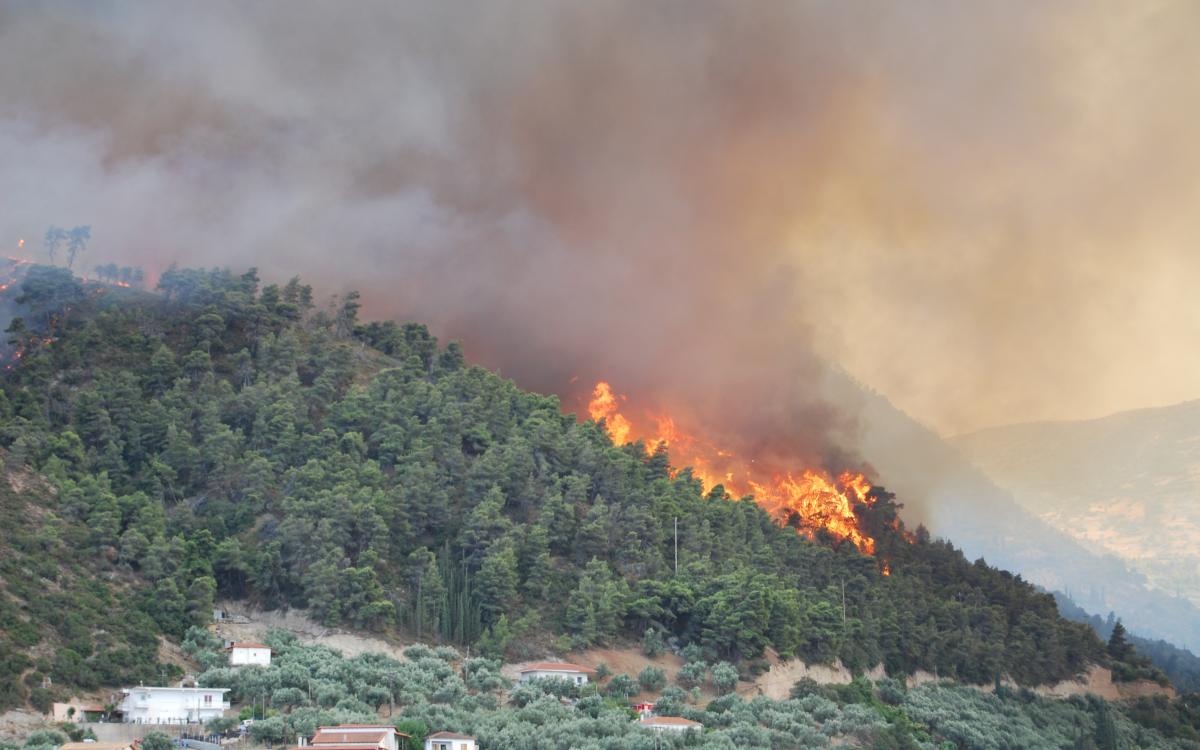
Since the 1990s, Ukraine has experienced increasingly warm springs and summers, with climate projections indicating a further rise in the frequency of exceptionally hot and dry conditions. These hotter and drier conditions driven by climate change together with natural decomposition and successive degradation processes disrupted by radiation create ideal conditions for larger and more intense fires in the Chernobyl region. At the same time, climate change is expected to increase the frequency and intensity of extreme rainfall events, raising the risk of flooding. Together, these developments increase the likelihood that radioactive contaminants stored in soils, vegetation and sediments will be re-mobilised.
Transport of radionuclides by wildfires and floods
Radionuclides are unstable radioactive elements that remain in the environment for long periods and can pose risks to human health and ecosystems when released into the air, water or soil. The report focuses on two radionuclides of particular concern: Caesium-137 (¹³⁷Cs) and Strontium-90 (⁹⁰Sr). While Caesium-137 binds strongly to vegetation and soils and can be released into the atmosphere during wildfires, Strontium-90 is more mobile in water and can be transported downstream during floods. As a result, climate change may create new pathways for radioactive contaminants to spread far beyond the Chernobyl Exclusion Zone.
Wildfires can release radionuclides into the atmosphere, while ash and contaminated particles left behind can be washed into rivers and other water bodies, creating multiple pathways for radioactive contamination to spread. Extreme rainfall and high river flows can mobilise radionuclides stored in contaminated soils, sediments and groundwater, carrying them through the Pripyat-Dnieper river system.
Compound risks and implications for security
While wildfire- and flood-related contamination pathways are often assessed separately, climate change is increasing the likelihood that these events occur in close succession, creating compound risks that may amplify the spread of radioactive contamination. Moreover, these risks could be further exacerbated by conflict-related incidents, such as drone strikes or acts of sabotage, potentially dispersing contaminants through both atmospheric and riverine pathways.
Beyond environmental and public health concerns, such scenarios may affect civilian and military actors alike, influence strategic planning, and create vulnerabilities that could be exploited for political coercion, disinformation campaigns or other forms of hybrid interference.
Radiological impacts remain limited
Despite the re-mobilisation of radionuclides during the 2020 Chernobyl wildfires, the report finds that radiological impacts on the wider population remained low. Estimated radiation doses for residents of Kyiv were well below regulatory exposure limits, while effects on populations elsewhere in Europe through inhalation and food consumption were considered negligible.
The findings on flooding are similarly nuanced. Existing dams and other remediation measures have largely been effective in limiting the downstream transport of Strontium-90. Yet, severe floods and the continued discharge of contaminated water from the inter-dam area mean that elevated concentrations of Strontium-90 downstream remain a concern.
Taken together, the authors argue that proactive wildfire prevention and the continued management of flood-protection infrastructure are essential to minimising radioactive exposure and reducing risks to communities, ecosystems and critical water resources.
This summary is based on extracts from report published by NATO Energy Secuirity Centre of Excellence and written by Andrew Sirjoosingh, Jutta Lauf, and Reiner Zimmermann. To read the full article, follow this link.
Photo credit: Alex E. Proimos, Forest Fires in Greece (Peloponnese, Greece, 2007), via Flickr, licensed under CC BY-ND 2.0.