
Report published by the Center of Strategic International Studies (CSIS), 6 October, 2026.
In the U.S. and Israeli war against Iran, Tehran's ability to threaten shipping through the Strait of Hormuz remained a key source of leverage. In response, Iraq and the Gulf states are investing in alternative export routes through new pipeline projects that bypass the strait. While these pipelines improve energy security by diversifying export options, they require significant investment and remain vulnerable to attack. Iran, however, is also adapting to this loss of leverage, including through Houthi attacks on tankers in the Bab el-Mandab, which threaten alternative export routes.
Specifically, the report offers four observations on the evolving contest between Gulf adaptation efforts and Iranian attempts to preserve its leverage over regional energy flows:
- Advances in Iranian drone and missile capabilities have increased the vulnerability of Gulf energy infrastructure across the entire value chain, from upstream production to downstream refining, with midstream energy assets being particularly vulnerable, including processing facilities, storage sites, and pipelines, whose disruption can have system-wide consequences.
- Covert ground and maritime sabotage would likely focus on upstream and midstream energy infrastructure, using tactics such as IEDs, rocket and mortar attacks, assaults on energy workers, coordinated ground incursions, piracy, and hostage-taking, while downstream facilities are generally less vulnerable due to stronger security.
- The threat of Iranian attacks differs across the region: Iraq combines high infrastructure vulnerability with extensive Iranian influence, while Saudi Arabia, the UAE, and other Gulf monarchies face greater political hostility from Tehran but benefit from stronger security and state capacity.
- The strategic impact of Iranian attacks depends as much on resilience and recovery capacity as on the attacks themselves: delays in repairing critical energy infrastructure can prolong production and export disruptions, increase costs, heighten security concerns, and enhance Iran's leverage over Gulf states, Western companies, and allied energy security.
More broadly, the report highlights how attacks on energy infrastructure can generate effects that extend beyond immediate physical damage. By threatening critical energy networks, Iran can increase internal security concerns, raise investment risks, and strengthen its coercive leverage over Gulf states and Western companies, potentially shaping diplomatic, security, and investment decisions even without causing sustained physical disruption.
The report concludes that reducing the risks posed by Iranian attacks requires a layered approach that combines traditional defence with resilience. Because defending extensive energy networks against increasingly affordable drones and missiles is costly and unlikely to be fully effective, resilience measures such as spare capacity, rapid repair capabilities, infrastructure redundancy, and security-conscious infrastructure design are just as important as conventional defence measures for limiting disruptions and reducing Iran's ability to exert coercive leverage through threats to regional energy infrastructure.
This summary is based on extracts from report published by Center of Strategic International Studies (CSIS) and written by Daniel Byman and Aldnen Ness. To read the full article, follow this link.
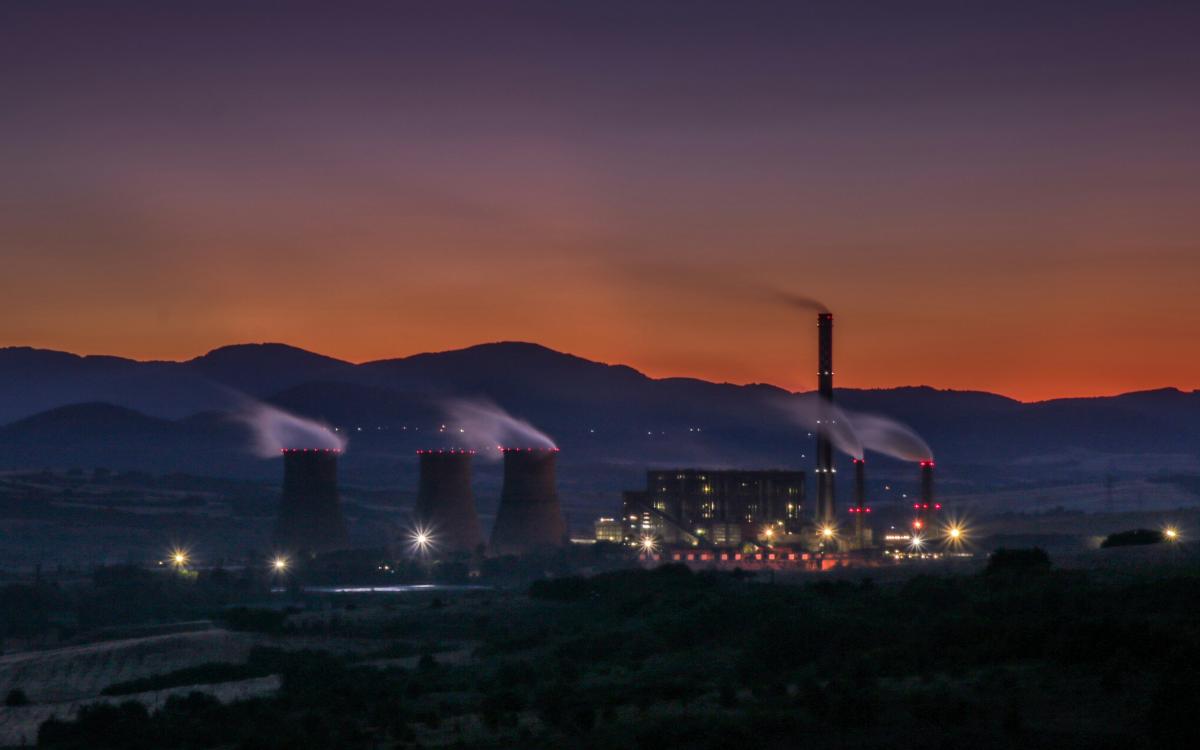
Image: Kiryanov, V. (2016) Sunset above power plant on Unsplash. Used under the Unsplash License.