
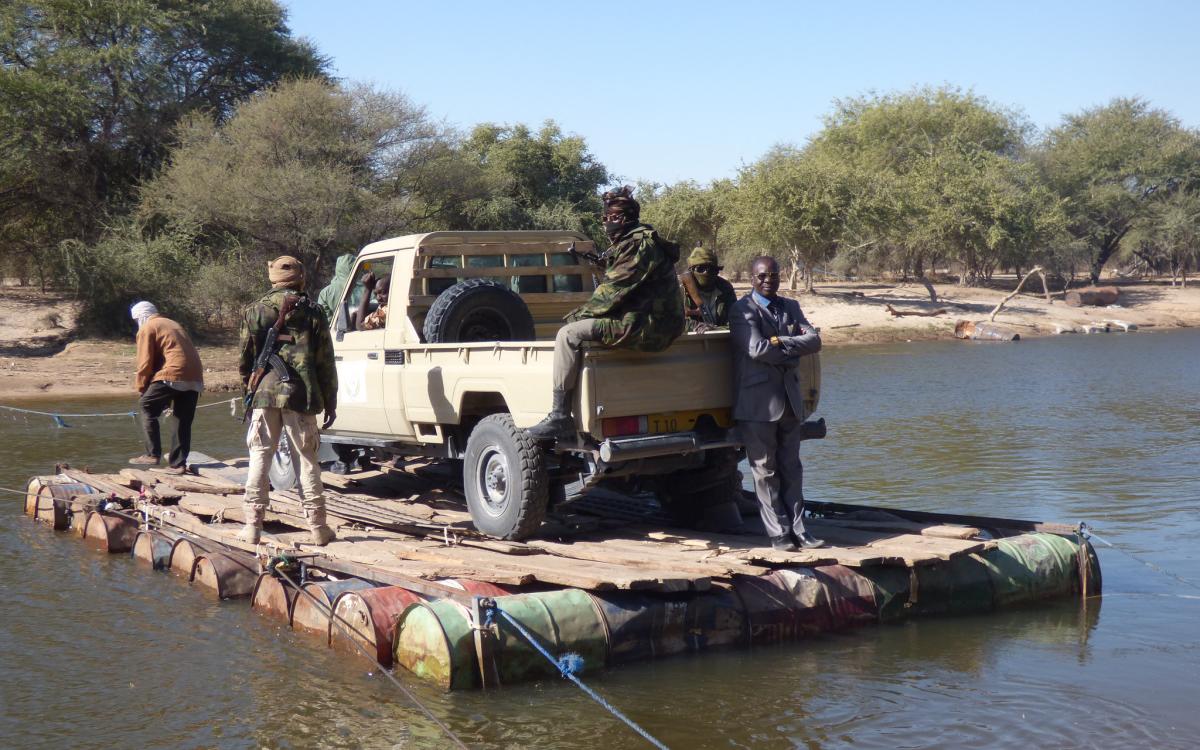
On June 3rd, the European Centre of Excellence for Civilian Crisis Management organised its 6th Community of Practice Talk on Non-State Armed Groups and Climate Change, featuring insights from Albert Souza Mulli, Peter Schwartzstein, and Hisham Al-Omeisy.
The main question that underlined the entire event was:
How do armed groups shape climate vulnerability – and what does that mean for climate adaptation efforts?
The discussion challenged a common assumption in climate-security debates: that armed groups are merely a consequence of climate-related instability. Instead, speakers highlighted how non-state armed groups can actively shape communities' exposure and resilience to climate risks through their governance practices, control of natural resources, and interactions with local populations.
Some key takeaways from the talk:
Armed groups are often governance actors, not only security actors.
An estimated 204 million people live in areas controlled or contested by armed groups, many of which are among the world's most climate-vulnerable regions. In these contexts, armed groups frequently influence access to water, land, humanitarian assistance, and environmental resources, directly shaping local governance dynamics.
Climate shocks can create opportunities for recruitment and influence.
Drawing on evidence from Iraq and Syria, Peter Schwartzstein showed how droughts, crop failures, and climate-related livelihood losses can increase resentment that armed groups exploit. Climate change is rarely a direct cause of recruitment, but it can amplify existing frustrations linked to inequality, poor governance, and corruption. Armed groups often capitalize on these vulnerabilities through targeted narratives and recruitment strategies.
The relationship between armed groups and climate adaptation is more complex than often assumed.
Research from Somalia and Yemen suggests that armed groups do not uniformly obstruct adaptation efforts. While some groups restrict humanitarian access and instrumentalize climate shocks for political and religious purposes, others engage in resource management, disaster response, and local governance functions. Their involvement can, in some cases, contribute to short-term resilience, even if it may undermine longer-term adaptive capacity.
Conflict itself is an environmental risk multiplier.
The Yemen case illustrated how armed conflict accelerates environmental degradation through the destruction of water infrastructure, unsustainable groundwater extraction, deforestation, oil pollution, and the erosion of environmental governance institutions. Climate vulnerability and conflict therefore often reinforce one another through mutually feedback loops.
The broader dilemma: climate adaptation strategies in fragile and conflict-affected settings often imply engaging with local non-state armed groups, raising questions regarding the legitimization of de facto governance actors and the political implications of such engagement.
As climate impacts intensify across many fragile contexts, understanding how armed groups influence vulnerability, resilience, and environmental governance remains a crucial debate that practitioners need to tackle if they want to inform and conduct effective policy.
- The Planetary Security Initiative (PSI) participated in the 6th Community of Practice Talk on Non-State Armed Groups and Climate Change. PSI would like to thank the European Centre of Excellence for Civilian Crisis Management for organising this timely discussion and for the insightful conversations it fostered.
Photo credit: United Nations Chad on Flickr