
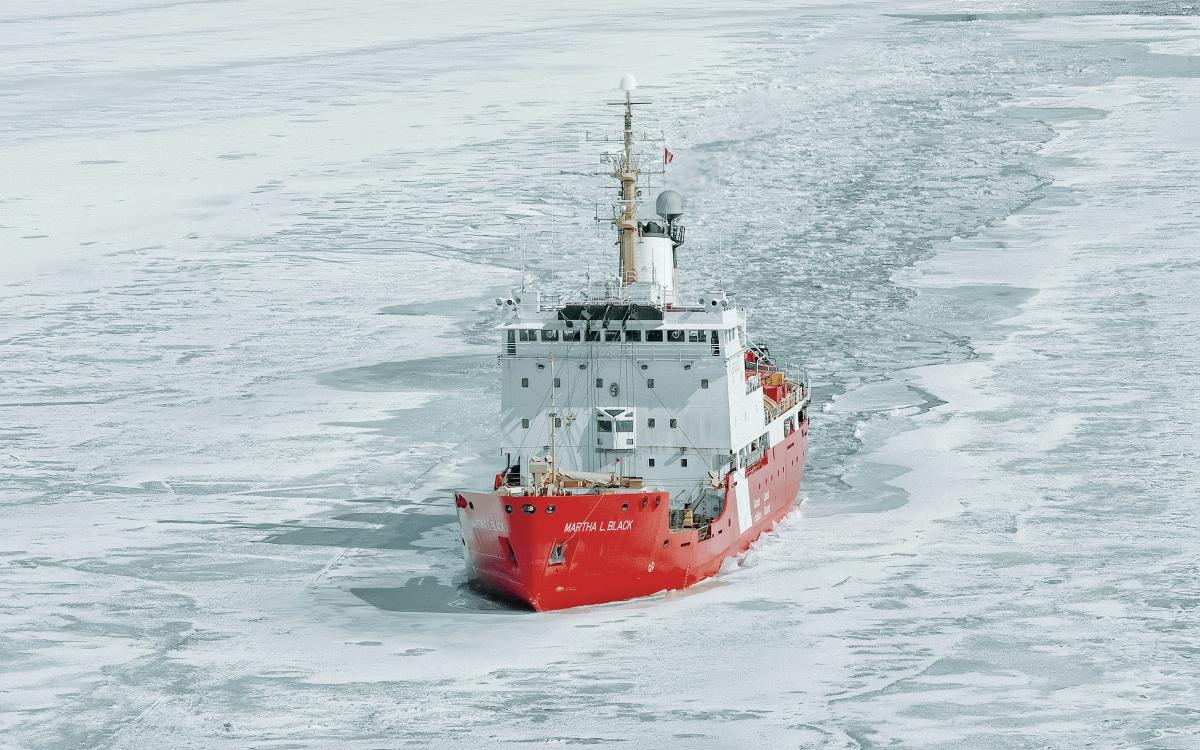
Commentary by Chatham House, 23 October 2026
In response to the evolving geopolitical landscape in the Arctic, accelerating climate change, and growing competition over access to the region’s abundant natural resources, both the EU and the UK have updated their respective Arctic strategies. The UK published its revised Arctic Policy Framework on 15 October, followed by the EU’s updated Europe’s Northern Neighbourhood strategy on 20 October. In a commentary by Chatham House, Marion Messmer and Patrick Schröder identify three key implications of these converging factors for the EU’s and the UK’s Arctic strategies:
- The Arctic’s growing strategic importance: Against a backdrop of growing Russian and Chinese activity in the region, both the EU and UK recognise the Arctic’s increasing strategic importance, albeit through different approaches. While the UK prioritises NATO-led deterrence and military readiness, the EU focuses on maritime surveillance, military mobility and subsea infrastructure protection as part of its broader Strategic Autonomy agenda. Both strategies also emphasize the importance of good governance, although the post-Cold War cooperative framework embodied by the Arctic Council has been undermined by Russia’s exclusion in 2022.
- Climate change as a European security priority: Given the possible cascading effects of climate change in the Artic on Europe's food security, infrastructure, and public finance - including through the weakening of the Atlantic Meridional Overturning Circulation (AMOC) - it is recommended for the UK and EU to better integrate Arctic climate risks into their wider security and resilience planning, recognising climate action as an essential component of European security. At the same time, both strategies face the challenge of reconciling climate protection with the pursuit of economic opportunities and growing security concerns in the region.
- The importance of strong Arctic partnerships: The authors stress the importance of deepening partnerships with Arctic states and Indigenous communities, calling for more comprehensive strategies that reconcile defence priorities, economic development, climate protection and Indigenous rights, while ensuring meaningful engagement with Arctic communities.
Taken together, these developments point to the need for a more integrated Arctic strategy, balancing defence and security priorities with climate protection, sustainable economic development and meaningful regional partnerships.
This summary is based on extracts from a report published by the Chatham House and written by Marion Messmer (Director, International Security Programme) and Patrick Schröder (Senior Research Fellow, Environment & Society Centre). To read the full article, follow this link.
Photo credit: Nick Brice / Unsplash