
Journal article published by Global Environmental Change, volume 98, July 2026.
It is widely known that climate change and conflict can reinforce one another, particularly in communities already facing weak institutions, livelihood insecurity and environmental degradation. Yet interventions designed to address these challenges are still often developed and implemented separately.
A new article published in Global Environmental Change examines how climate change adaptation and peacebuilding can be better integrated in fragile and conflict-affected settings. In particular, the study is focused on the Cispatá Bay - on Colombia’s Caribbean coast. The researchers analyse a community simultaneously exposed to the consequences of armed conflict and growing climate pressures, including coastal erosion, flooding, saltwater intrusion and mangrove degradation. The study draws on 16 semi-structured interviews with community representatives and organisations working on climate adaptation and peacebuilding, alongside an analysis of 45 supporting documents.
The authors find that, despite generally being implemented through separate institutional and policy channels, adaptation and peacebuilding interventions already build many of the same capacities. Six areas of overlap emerge particularly strongly: 1) access to information, 2) education, 3) social networks, 4) employment, 5) environmental management, and 6) healing. For instance, livelihood diversification and environmental restoration can simultaneously strengthen communities’ ability to cope with climate impacts and reduce some of the economic and social pressures associated with conflict.
At the same time, the research identifies important gaps between the two fields. Adaptation interventions often pay insufficient attention to protection and physical security, while peacebuilding activities do not always incorporate socio-cognitive factors such as perceptions, identities, previous experiences and attitudes that can shape how communities respond to said climate risks. In conflict-affected settings, overlooking either dimension can undermine otherwise well-designed interventions and potentially reinforce existing vulnerabilities.
Building on these findings, the authors propose an integrated framework centred around eight areas of capacity: 1) governance and institutions, 2) agency and cognitive processes, 3) employment and livelihood diversification, 4) technological and economic resources, 5) learning, 6) healing, 7) security and justice, and 7) social networks. The framework is intended to help practitioners identify where climate adaptation and peacebuilding objectives can reinforce one another rather than being addressed through parallel programmes.
The study also points to the importance of institutional coordination. In Cispatá Bay, organisations working on climate adaptation and peacebuilding largely remain clustered within their respective sectors. The study highlights the potential role of local coordination mechanisms and so-called “boundary spanners” that can connect organisations across these divides, facilitating communication, knowledge-sharing and collaboration.
For the broader climate-security agenda, the article highlights a familiar but persistent challenge: recognising the links between climate change and insecurity is not enough if the institutions responding to them continue to operate separately. More integrated approaches could help ensure that adaptation strengthens peace and social resilience, while peacebuilding efforts account for the environmental and climate risks that increasingly shape fragile and conflict-affected communities.
Main takeaways
Climate adaptation and peacebuilding often address the same vulnerabilities.
The study finds important overlaps in areas such as livelihoods, education, social networks and environmental management.
Working in silos can leave critical and self-reinforcing gaps.
Adaptation may overlook security concerns, while peacebuilding may fail to account for factors shaping how communities respond to climate risks.
Stronger cross-sector coordination can support both resilience and peace.
Connecting adaptation and peacebuilding actors can improve cooperation and make interventions more coherent.
This summary is based on extracts from a journal article published by Global Environmental Change, volume 98, and written by Luisa Fernanda Bedoya Taborda (James Cook University, The University of Sydney, and University of Medellin), Tiffany H. Morrison (James Cook Univeristy and University of Melbourne), and Michele L. Barnes (James Cook University, the University of Sydney). To read the full article, follow this link.
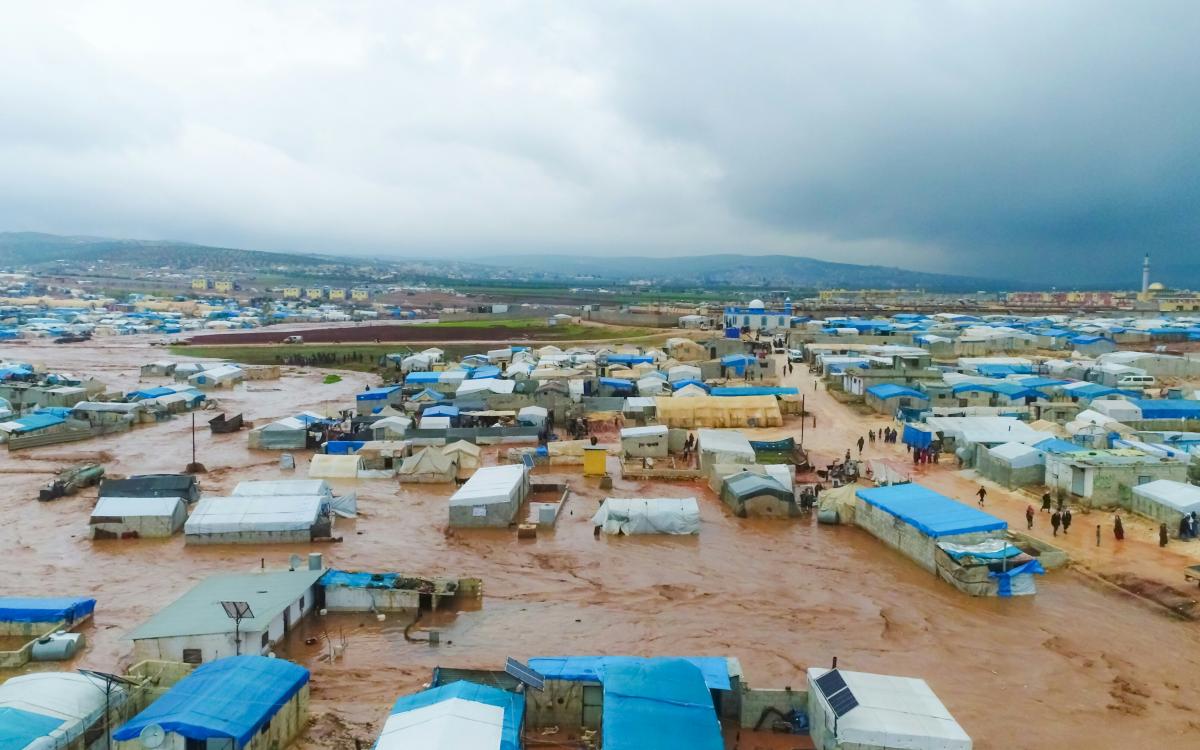
Photo Credit: Salah Darwish on Unsplash