
In February, a new Dutch cabinet was officially sworn in. What can we expect from the minority government comprising the Progressive Liberals (D66), the Conservative Liberals (VVD) and the Christian Democrats (CDA) regarding climate security? The coalition agreement presented on 30 January contains ambitious plans for climate, the energy transition, and industry, as well as significant investments in security and defence. But how do these goals relate to each other in the current geopolitical context? This article highlights three essential points of climate and energy security - the central theme in the coverage of the Planetary Security Initiative (PSI).
1) From climate investments to autonomy
The coalition agreement states that the Netherlands and Europe should reduce their dependencies on third powers in the areas of defence, energy, technology, finance, and industry (Coalition Agreement 2026-2030, p. 33). In doing so, the government explicitly places climate and energy policy within a broader goal of 'strategic autonomy'. The plan is to invest in clean energy production on Dutch soil and in cooperation with neighbouring countries (p.24). These investments therefore not only help achieve climate goals such as emissions reduction but also strengthen European energy security.
The logic is clear: if you generate your own energy, you are less vulnerable to geopolitical pressure.
However, the question remains whether the Dutch government's energy and climate measures are sufficient to achieve greater autonomy. The Netherlands is facing rising energy demand driven by digital needs such as data centres, cleantech, high-tech, and AI. As a result, the country is still likely to depend on foreign supplies, which can be used as a geopolitical means of pressure against the Netherlands. The coalition agreement references the risk of dependency on non-democratic countries (p.24); however, these dependencies extend beyond undemocratic nations to include the US, for instance, regarding natural gas supplies.
2) A robust infrastructure
Energy security requires more than just political intentions; it also depends on the physical infrastructure. That is why solving grid congestion is a top priority for the new government: it is set to invest in capacity, in innovative demand integration, and in underground heating networks, all to reduce congestion (p.24). At the same time, the energy infrastructure, both fossil and renewable, is vulnerable to external threats. Think, for example, of sabotage of natural gas pipelines or hybrid attacks on wind and solar facilities. That is precisely why it is crucial that energy and climate policy are integrated with national security considerations.
This awareness is partly reflected in the coalition agreement, particularly in the emphasis on vital infrastructure and its protection in the North Sea (p.32), which is home to several subsea gas pipelines, interconnectors and data cables. More generally, the resilience of energy infrastructure is not explicitly addressed, nor are disruptions caused by climate change or geopolitical tensions. Tackling these requires integrated strategic resilience planning that spans several ministries, which is typically difficult to achieve in The Hague (see Figure 1).
3) Critical raw materials as a systemic bottleneck
The new Dutch government is firmly committed to investing in Research & Development and wants to act more strategically as a 'launching customer' - meaning it serves as the first investor in innovative ideas. This approach should strengthen the Netherlands' innovation, employment, and competitiveness, thereby increasing its geo-economic strength. The coalition agreement explicitly refers to innovative climate and energy technologies as well as defence technologies (p.28). These sectors depend on the same raw materials to produce, for example, batteries, radar and chips; these inputs, however, are currently mainly imported from outside Europe, notably from China. The new Dutch government aims to reduce dependence on these foreign supply chains (p.34).
To ensure critical raw materials stay in the Netherlands, the government aims to scale up circular techniques and supports them through the 'National Circular Economy Programme' (p.25). It is unclear what other actions will be taken to prevent the civilian and military sectors from ultimately competing for the same scarce resources, even though the new coalition's generally more pro-European stance may suggest support for EU-level measures in this field, such as the EU Critical Raw Materials Act. It is therefore not entirely clear how the CRM challenge will be resolved. A longer-term vision on how defence and energy transition technology and innovation could perhaps reinforce each other is also still missing.
Moving forward: Climate security returns to the agenda, but policies to support it still need shaping.
The new government’s commitment to climate and energy technology not only serves environmental goals but is also explicitly linked to strategic autonomy, critical infrastructure, competitiveness, and security. Prime Minister Jetten himself highlighted following his first European Summit that climate policy - specifically the phasing out of fossil dependencies - is particularly vital for Europe amid the energy crisis following the war in Iran.
A recent parliamentary letter by the Minister for Foreign Trade and Development Cooperation, Sjoerd Sjoerdsma, and the Minister for Climate and Green Growth, Stientje van Veldhoven, further underscores the Dutch commitment to international climate goals in relation to global security. They specifically noted: “Where [due to climate change] land, water, or food are less available, conflicts can arise or escalate.”
Parliament has shown similar interest, following a British intelligence report on climate change as a national security risk. A motion by D66 MP Felix Klos and colleagues, which recently passed, calls on the Minister for Climate and Green Growth to organize a first briefing on climate, nature, and security. This would bring together the NCTV (National Coordinator for Security and Counterterrorism), security experts, and scientists to examine risks for the Netherlands in this nexus.
The new ‘Jetten’ government has thus reinstated the climate and energy security agenda, but the real test will be translating these goals into policies supported by a parliamentary majority. So far, ambition has not yet been matched by concrete plans or a comprehensive strategy regarding energy or climate resilience. This practical step, however, is increasingly urgent given the scale of the challenges highlighted in this article - from explosive electricity demand to the vulnerability of physical infrastructure and the heavy dependence on imports and critical raw materials. The coming months will reveal how these ambitions take shape under current geopolitical conditions, where dependencies, infrastructure vulnerabilities, and competition for resources continue to challenge policymaking.
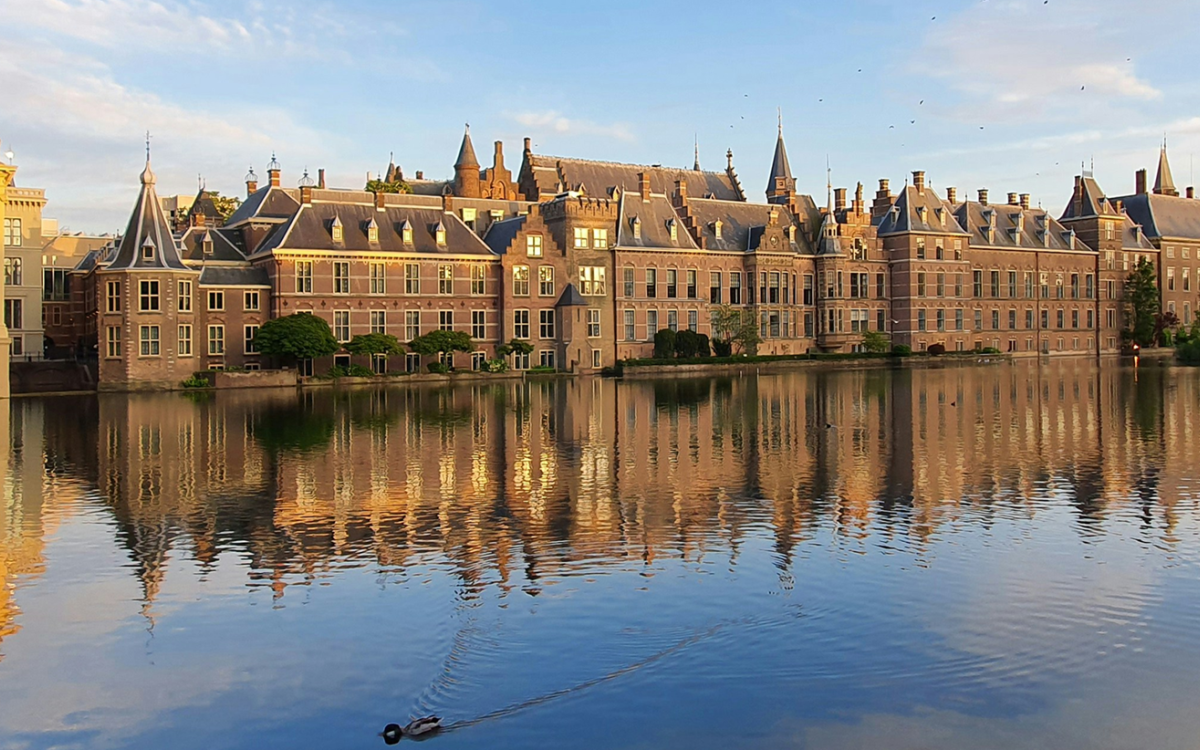
Photo by Marjoline Delahaye on Unsplash
This article was written by Pepijn Verhaak (team PSI). The full coalition agreement can be found here.
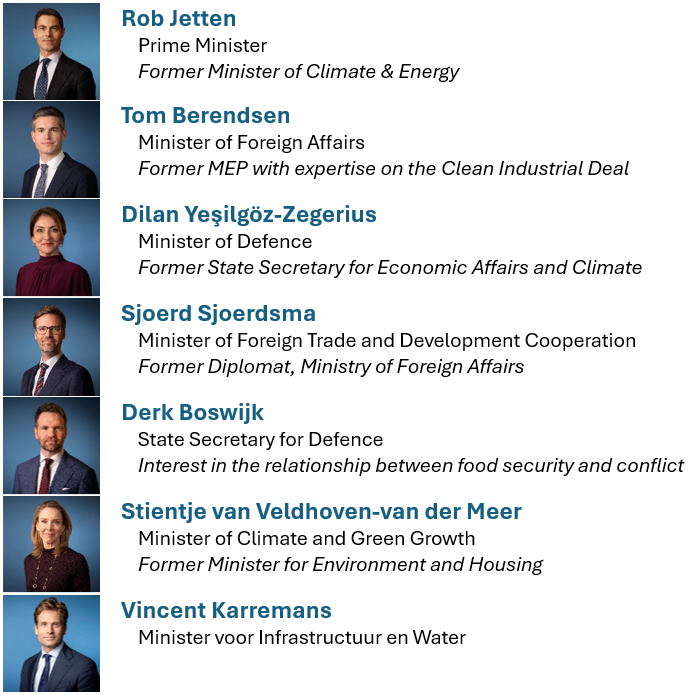
in Climate and Energy Security. Pictures: Martijn Beekman.