

This Environmental Outlook by the OECD on the nexus between climate change, biodiversity loss, and pollution was published on 26 November 2025.
The triple planetary crisis of climate change, biodiversity loss, and pollution poses an increasing threat to the environment and the economy. While each of these challenges is urgent, their interconnections can amplify their combined impact and create opportunities for collaborative action. The Environmental Outlook aims to support an integrated policy approach that considers common drivers, pressures, and mutually reinforcing effects of climate change, biodiversity loss, and pollution.
The three challenges share interlinked drivers.
Projections based on integrated biophysical and economy-wide modelling in the Outlook indicate that, under current policies, between 2020 and 2050:
(1) Global GDP is expected to more than double, with large parts of Asia and Africa expected to experience the fastest growth.
(2) These growth patterns are linked to socio-economic trends such as population and economic expansion, which will mainly drive environmental pressures. Mainly due to a growing demand for intensive agriculture, the use of fossil fuels despite the growth of renewable energy use, and the use of primary materials.
(3) The environmental impact of the continued growth of energy, food, materials, and water demand is likely to be tempered by technological and behavioural changes linked to economic growth.
Environmental pressures at the core of the triple planetary crisis are projected to intensify across multiple dimensions
As these pressures increase, climate change, biodiversity loss, and pollution are set to worsen further over time and mutually reinforce each other. Modelling estimates suggest that, under current policies, the global mean temperatures will continue to rise, making climate change the main driver of biodiversity loss by 2050. The reports identify 26 examples of interconnections between the triple planetary crisis of climate change, biodiversity loss, and pollution. Five of these are highlighted in Table 1.
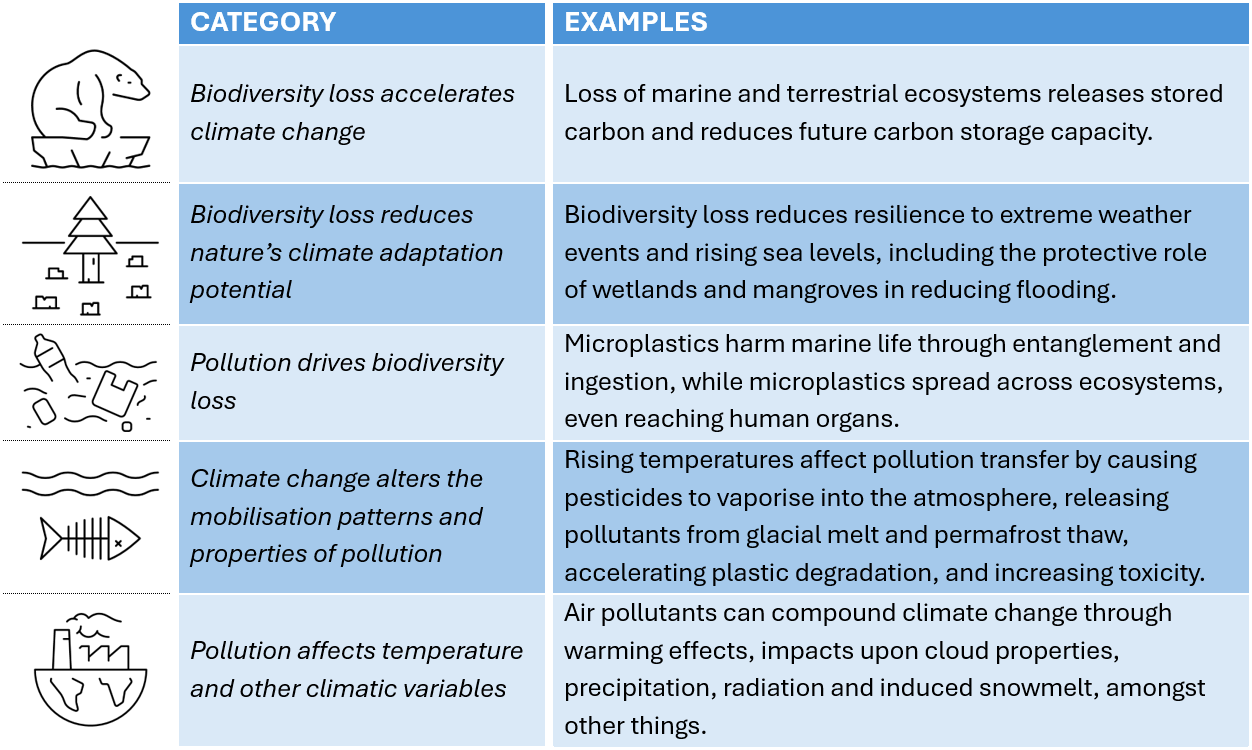
Roadmap for policy action
The linkages among climate change, biodiversity loss and pollution may suggest that addressing one challenge automatically helps tackle the other two. However, interactions between policies underscore the potential for synergies and trade-offs. Failing to consider the interactions can result in policy gaps and missed opportunities for more integrated action. Figure 1 outlines a policy roadmap to address the interconnected nature of these environmental challenges.
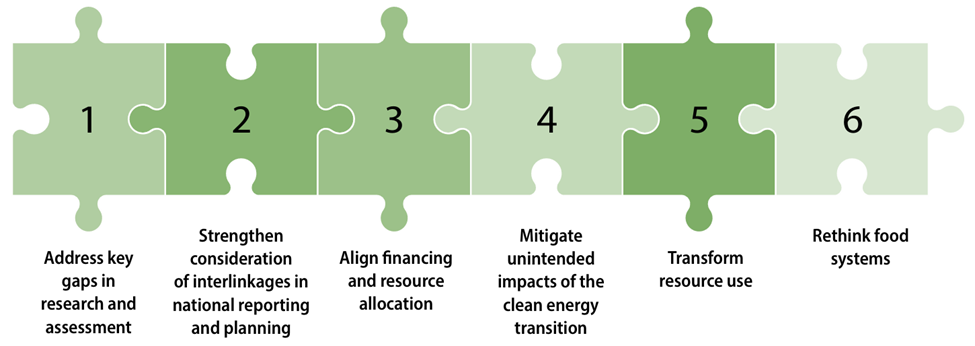
Combining the six levers of the policy road map reveals opportunities for a more integrated approach to renewable energy expansion, protected area management, air pollution control, and nutrient management.
Photo by Chris Liverani on Unsplash
This text is based on extracts from the policy highlights of the OECD's Environmental Outlook. To read the full version of the report, follow this link. For the policy highlights, click here.