
Report published by Comment Central, 9 October, 2026.
As General Dhiraj Seth, India’s new Chief of Army Staff, looks to prepare the army for a rapidly evolving security landscape, another often-overlooked factor shaping the future battlefield is coming into sharper focus: climate change.
Climate change will shape where, when, and how the military fights.
An earlier report published by the Clingendael Institute in collaboration with the Institute of Peace and Conflict Studies (also see our previous blog) illustrates how climate change affects Indian military readiness. The report highlights three key observations that complement Gen.Seth's assessment of the changing character of warfare:
- Conditions are changing rapidly and becoming more extreme: hotter temperatures, heatwaves, floods, and irregular monsoons are creating less predictable operating environments.
- These changing conditions directly affect military operations: from heatwaves to cloudbursts and rising salinity, climate change is disrupting military operations and equipment.
- The Indian military's operational tempo is becoming increasingly unpredictable: drawing on the previous two observations, climate-related disruptions require more differentiated capabilities and contingency planning, placing growing pressure on military readiness and response capacity.
Overall, the article highlights that climate change is increasingly influencing military readiness and should be integrated into defence planning alongside geopolitical and technological developments.
This summary is based on extracts from report published by Comment Central and written by Siddharth Anil Nair. To read the full article, follow this link.
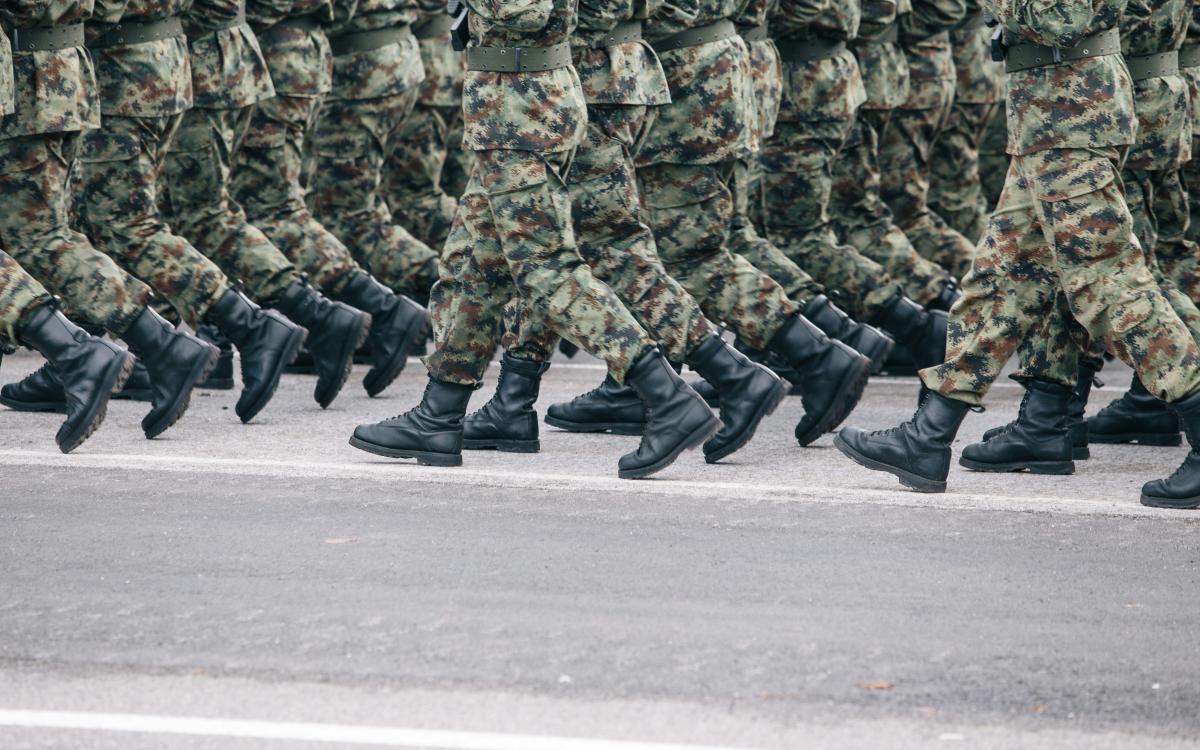
Image: Soldiers marching in formation © Filip Andrejevic. Published on Unsplash on 19 December 2020. Used under the Unsplash License.