
The CCASCOE Brief is a recurring climate‑security series published six times a year. Each edition offers a clear and accessible synthesis of complex climate‑security issues from multiple perspectives, aimed at specialists, practitioners, policymakers, decision‑makers, and anyone interested in how climate change intersects with and transforms security and defence.
This edition (July 2026) features two in‑depth analyses: one by Spencer McMurray on the structural reasons climate change remains largely absent from NATO’s exercise ecosystem, and one by Arnaud Boehmann on how climate change is reshaping naval power, operations, and infrastructure.
A System Working as Designed: Why Climate Change Has Not Entered NATO’s Exercises
In this article, Spencer McMurray argues that although NATO’s political leadership recognises climate change as a defining security challenge - and climate‑related content is not entirely absent from NATO’s exercise ecosystem - this commitment has not translated into the structures that govern NATO’s exercise system. Climate impacts appear mostly at the margins of wargames and low‑intensity scenarios, and almost never in the major Article 4/5 command‑post exercises where NATO’s real plans are rehearsed and headquarters certified.
McMurray’s core argument is that this omission is structural rather than accidental. NATO lacks an operational concept, doctrine, planning requirement, and training standard for climate‑security integration. Because exercises are built around adversarial threats, short planning horizons, and resolvable injects, climate impacts - cascading, non‑adversarial, and slow‑burning - do not fit the design logic. Even when climate injects do appear, they leave no institutional residue: they are resolved quickly, forgotten, and never feed into planning assumptions or capability development.
He warns that this gap already has real‑world consequences. NATO forces have encountered climate‑driven disruptions - dust storms, infrastructure failures, extreme weather - without prior rehearsal or shared understanding. Without structural reform, NATO risks confronting climate impacts for the first time in real operations, under pressure.
Naval Power in the Age of Climate Crisis
In the second article, Arnaud Boehmann examines how climate change is transforming the maritime operating environment and argues that navies must integrate climate adaptation into force design now, given long shipbuilding timelines and rising environmental stress.
He shows how warming oceans, acidification, shifting currents, and more extreme weather affect every dimension of naval power:
- Platforms: increased stress on hulls and superstructures, reduced cooling efficiency, overheating engines, degraded electronics.
- Aviation: lower air density and increased lightning activity reduce payloads, flight windows, and operational reach.
- Personnel: greater heat exposure, dehydration risks, and behavioural stress in confined, high‑intensity environments.
- Infrastructure: ports and coastal bases face rising sea levels, storm damage, and more frequent flooding.
- Operations: demand for humanitarian assistance and disaster relief (HADR) will rise sharply as coastal populations face more climate hazards.
- Strategic environment: the Arctic is becoming more accessible yet remains logistically challenging; critical maritime infrastructure requires expanded surveillance and uncrewed systems.
Boehmann concludes that without climate‑informed planning, navies will be unable to meet mission requirements in a climatically altered world. Adaptation must be embedded in ship design, mission planning, infrastructure resilience, and operational concepts.
This text is based on extracts from the CCASCOE Brief, Vol. 1, Issue 2. To read the full articles, follow the link.
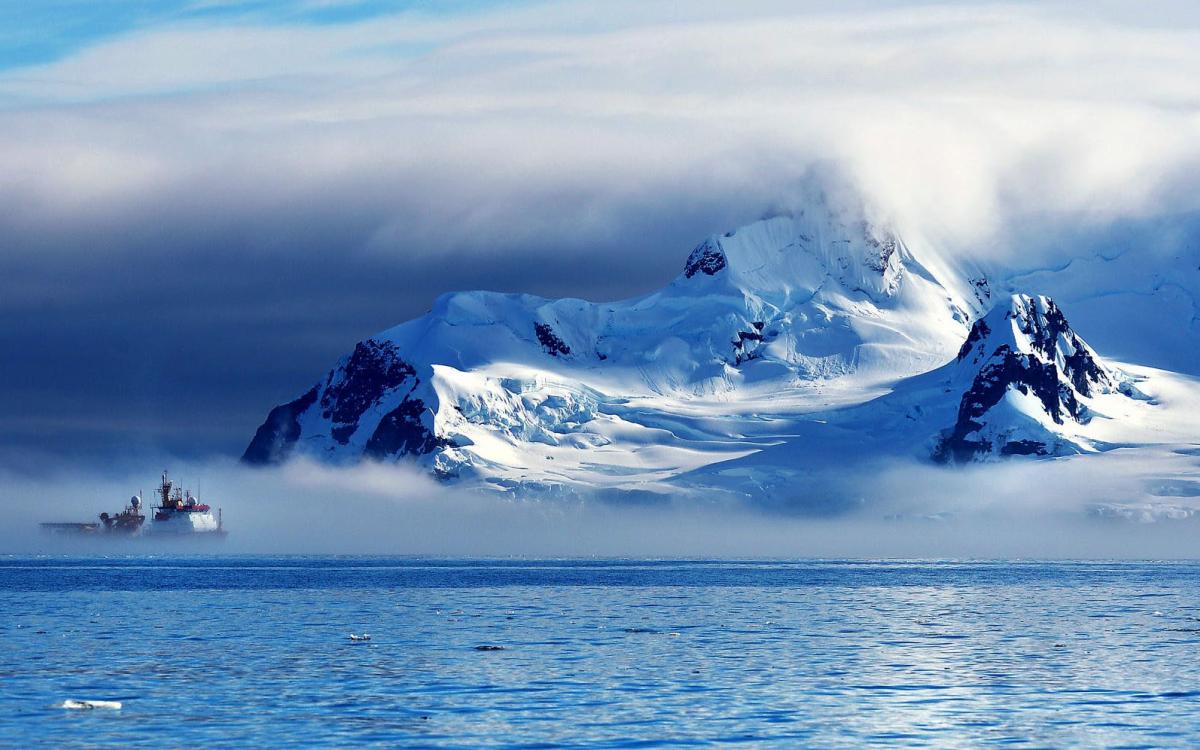
Image credit: Defence Imagery on Flickr.
© Crown Copyright 2014
Photographer: LA(Phot) Vicki Benwell, Image ME140039078.jpg from www.defenceimages.mod.uk