
Assessment report by the Initiative on GHG Accounting of War, published with EcoAction and the Ministry of Economy, Environment and Agriculture of Ukraine, 20 February 2026.
As Russia’s full-scale invasion of Ukraine has entered its fourth year, the war’s environmental footprint has become impossible to ignore. Beyond human suffering and physical destruction, the conflict is driving massive greenhouse gas emissions, turning warfare itself into a major contributor to climate damage.
This new assessment by the Initiative on GHG Accounting of War examines the scale and sources of war-related emissions between February 2022 and February 2026. It shows how direct factors, such as military activity, landscape fires, attacks on energy infrastructure, population displacement, disrupted aviation routes and reconstruction efforts, together generated an estimated 311 million tonnes of CO₂ equivalent - comparable to the annual emissions of France.
Far from being a side effect, climate damage has become structurally embedded in the conflict. Unusually hot and dry conditions have amplified war-driven landscape fires, while repeated strikes on energy infrastructure have increased reliance on fossil-fuel generators and carbon-intensive reconstruction. In this way, armed conflict and climate change reinforce one another in a vicious cycle of environmental degradation.
In response, Ukraine announced plans to hold Russia accountable for these war-related excess emissions. In particular, the country plans to file a claim under the Environment Damage category of the Register of Damage for Ukraine, with the total climate damage claim exceeding 57 billion USD.
The central message is clear: modern warfare is also a climate issue. Addressing the environmental costs of conflict - from emissions accounting to reconstruction choices - must become an integral part of peace, security and climate governance.
Main takeaways
- War as a major emissions driver. Russia’s invasion has generated over 311 MtCO₂e in four years, placing armed conflict on par with major emitting countries such as France.
- Climate-conflict feedback loops. Rising temperatures and drought have amplified war-driven fires, while conflict accelerates climate damage through fuel use and destruction.
- Infrastructure attacks matter for climate. Strikes on energy systems increase emissions both immediately and through rebuilding efforts.
- Towards accountability for climate damage. Ukraine’s planned climate damage claim signals a growing effort to integrate environmental harm into international justice mechanisms.
This text is based on extracts from the assessment report led by Lennard de Klerk (Initiative on GHG Accounting of War) with co-authors Mykola Shlapak (Initiative on GHG accounting of war), Sergiy Zibtsev (National University of Life and Environmental Sciences of Ukraine, Regional Eastern Europe Fire Monitoring Centre), Viktor Myroniuk (National University of Life and Environmental Sciences of Ukraine), Oleksandr Soshenskyi (National University of Life and Environmental Sciences of Ukraine, Regional Eastern Europe Fire Monitoring Centre), Roman Vasylyshyn (National University of Life and Environmental Sciences of Ukraine), Svitlana Krakovska (Ukrainian Hydrometeorological Institute), Lidiia Kryshtop (NGO “PreciousLab”, National Aerospace University «Kharkiv Aviation Institute»), Rostyslav Bun (Lviv Polytechnic National University).To read the complete piece, follow the link here.
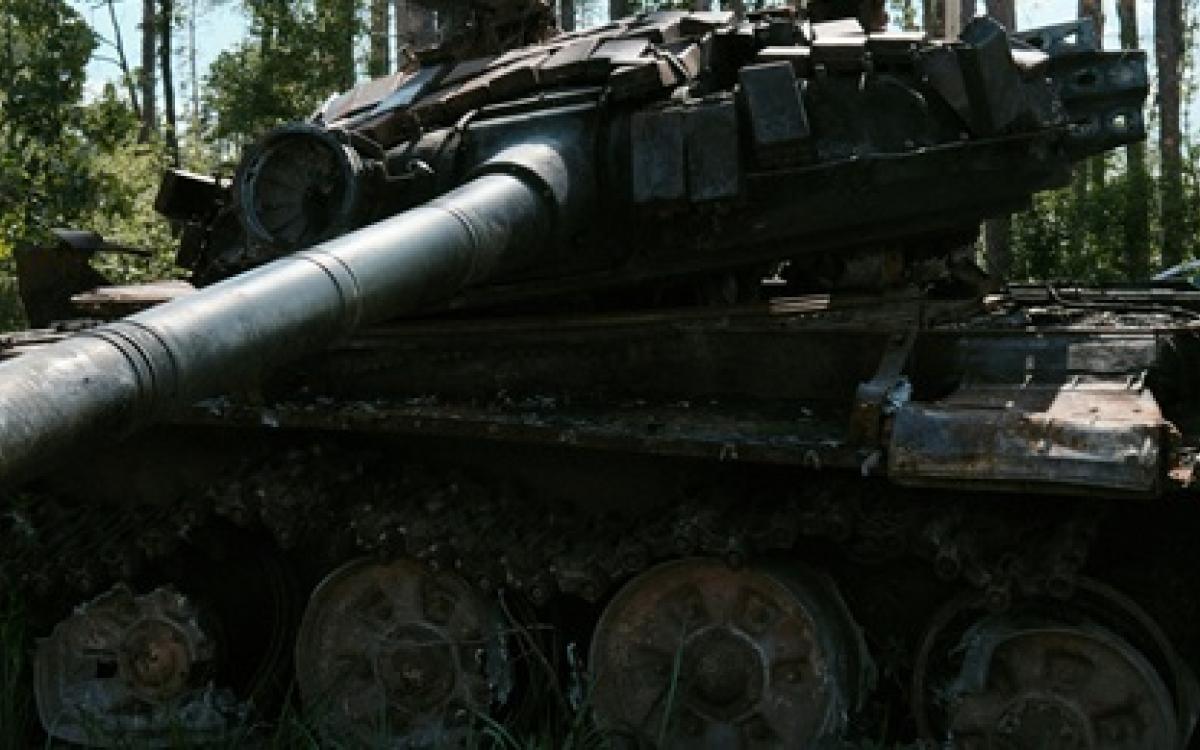
Photo credit: Alex Fedorenko on Unsplash.