
On Friday 3 July, the Netherlands Ministry of Defence presented its new Climate Change and Security Strategy. The publication marks a milestone for Dutch defence policy, formally introducing a comprehensive framework to address climate change not merely as an environmental concern, but as a critical threat multiplier that fundamentally reshapes global stability and national defence readiness.
Aligning with Multilateral Commitments
The strategy comes at a time of heightened geopolitical tension, where the intersection of environmental degradation and security can no longer be ignored. Under the European Union’s Strategic Compass, member states committed to developing national strategies to prepare their armed forces for the realities of a changing climate. Similarly, by NATO agreement climate considerations must be integrated into its core tasks of collective defence, crisis management, and cooperative security.
By introducing this strategy, the Netherlands thus fulfils these international obligations.
The objective is to transition the military into a "climate-ready" organisation - one that moves away from a reactive posture and instead actively anticipates future security risks.
As the Ministry notes, integrating climate awareness into policy, planning, and execution is mission-critical to maintaining overall combat power and fulfilling its constitutional mandates: defending allied territory, promoting the international rule of law, and supporting civil authorities during domestic crises.
Shifting Strategic Realities
The strategy highlights three fundamental shifts that require structural evolution across all military domains:
- An Altered Threat Landscape: Global warming acts as a catalyst that worsens existing demographic, economic, political, and social tensions. The resulting scarcity of water, food, and raw materials increases the risk of regional conflict, resource competition, and mass migration. Moreover, the military expects a higher frequency of deployments, particularly for domestic and international Humanitarian Assistance & Disaster Relief (HADR) operations following frequent natural disasters.
- An Unforgiving Operating Environment: Armed forces will increasingly have to operate under extreme environmental conditions, such as severe heat, prolonged droughts, and heavy rainfall. This poses a direct challenge to readiness, as existing military infrastructure, logistical lines, and physical capabilities remain highly vulnerable to these changing weather patterns.
- The Critical Imperative of Energy Security: Recent geopolitical conflicts demonstrate that energy installations and supply lines are primary strategic targets. The Dutch military recognises its current vulnerability due to a heavy reliance on fossil fuels. Moving toward green technologies and circular resources is therefore framed as an operational necessity: it reduces strategic dependencies on scarce raw materials, lowers the logistical footprint, and directly strengthens autonomous sustainability on the battlefield.
Four Pillars of Action
To balance short-term geopolitical demands with long-term climate targets, the Ministry of Defence is executing a simultaneous, four-pronged approach:
- Anticipation: Developing advanced internal knowledge, skills, and strategic foresight to predict climate-driven conflicts, risks, and strategic opportunities before they escalate.
- Adaptation: Upgrading equipment, infrastructure, and tactical training so that personnel can continue to operate effectively regardless of harsh or changing operational conditions.
- Mitigation: Making systematic efforts to reduce the military’s ecological footprint, optimise resource recycling, and advance the energy transition, with a strict focus on securing energy supplies and enhancing autonomous operational endurance.
- Collaboration: Serving as the foundation for the entire strategy by deepening partnerships with national and international entities, including allied nations, research institutions, civil society, and the private sector - including a commitment to the NATO Climate Change and Security Centre of Excellence and the European Defence Agency's Capability Technology Groups.
Striking the right Balance
The strategy candidly acknowledges the complexities of today's security landscape, noting that navigating intense geopolitical rivalry while simultaneously striving to meet climate objectives requires a deliberate balancing act. While the Ministry aims to maximise both goals, it notes that compromises will be inevitable.
At the same time, a major strength of this strategy is that it does not treat these two priorities as a zero-sum trade-off. Instead, it positions climate action as a driver of operational advantage. By modernising energy supply lines, shrinking logistical footprints, and reducing strategic vulnerabilities, the military can actually turn adaptation into a capability booster. Ultimately, the foundational message remains clear:
for a modern military, climate readiness is no longer optional - it is an essential component of future combat power and strategic resilience.
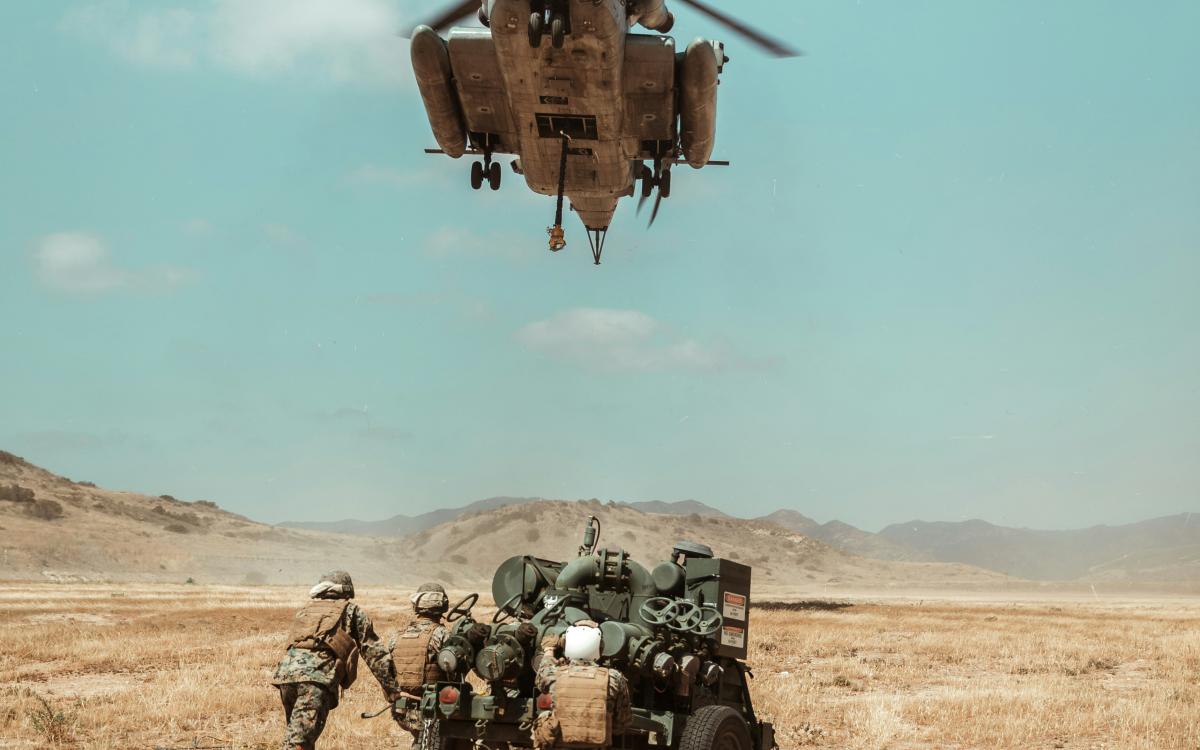
Photo by Joel Rivera-Camacho on Unsplash
This text is based on extracts from the Climate Change and Security Strategy, by the Netherlands Ministry of Defence. To read the full contribution, *in Dutch, follow this link.
*An English translation of the strategy is expected later this month. This webpage will be updated to feature the English report in due course.